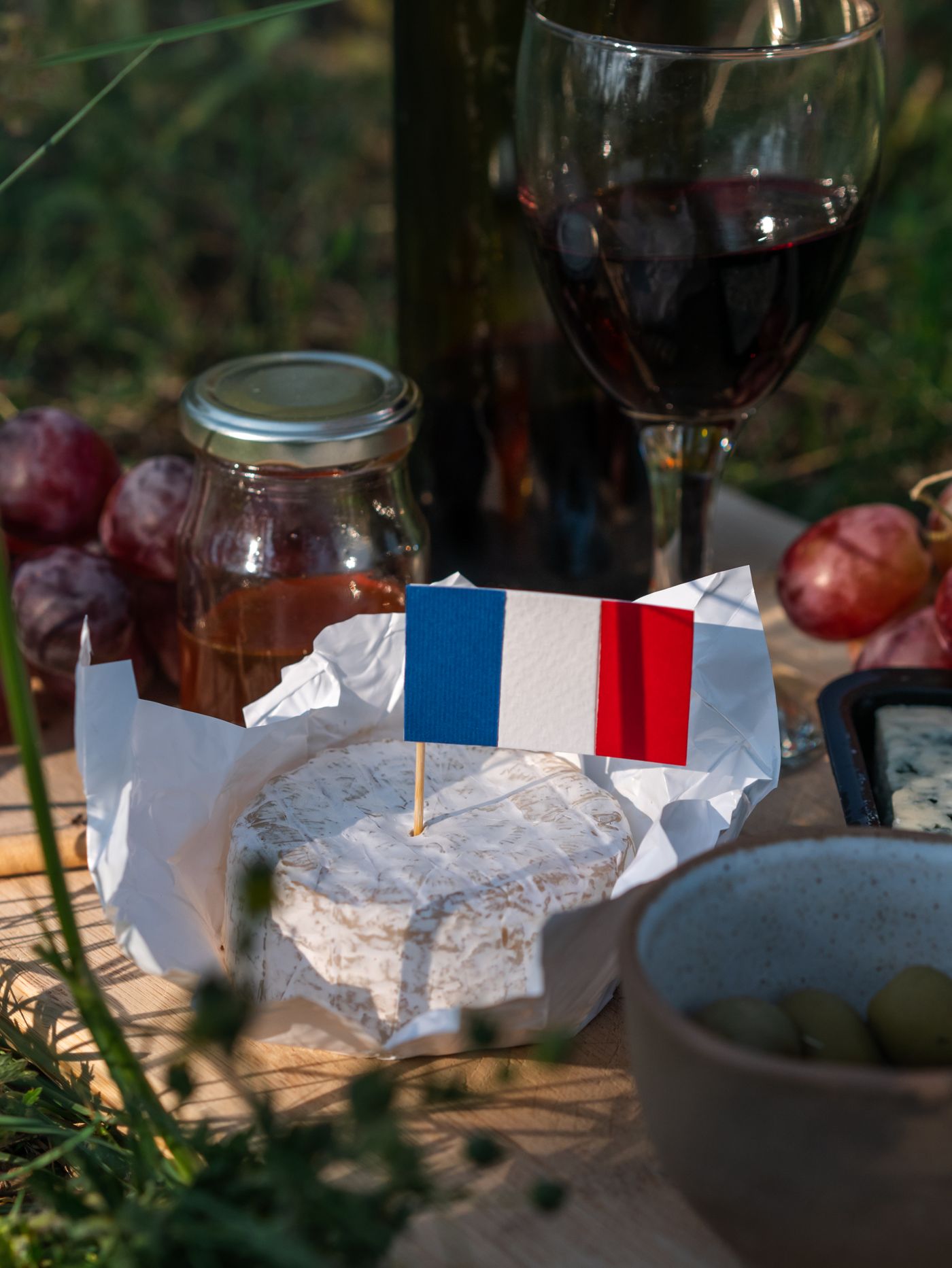

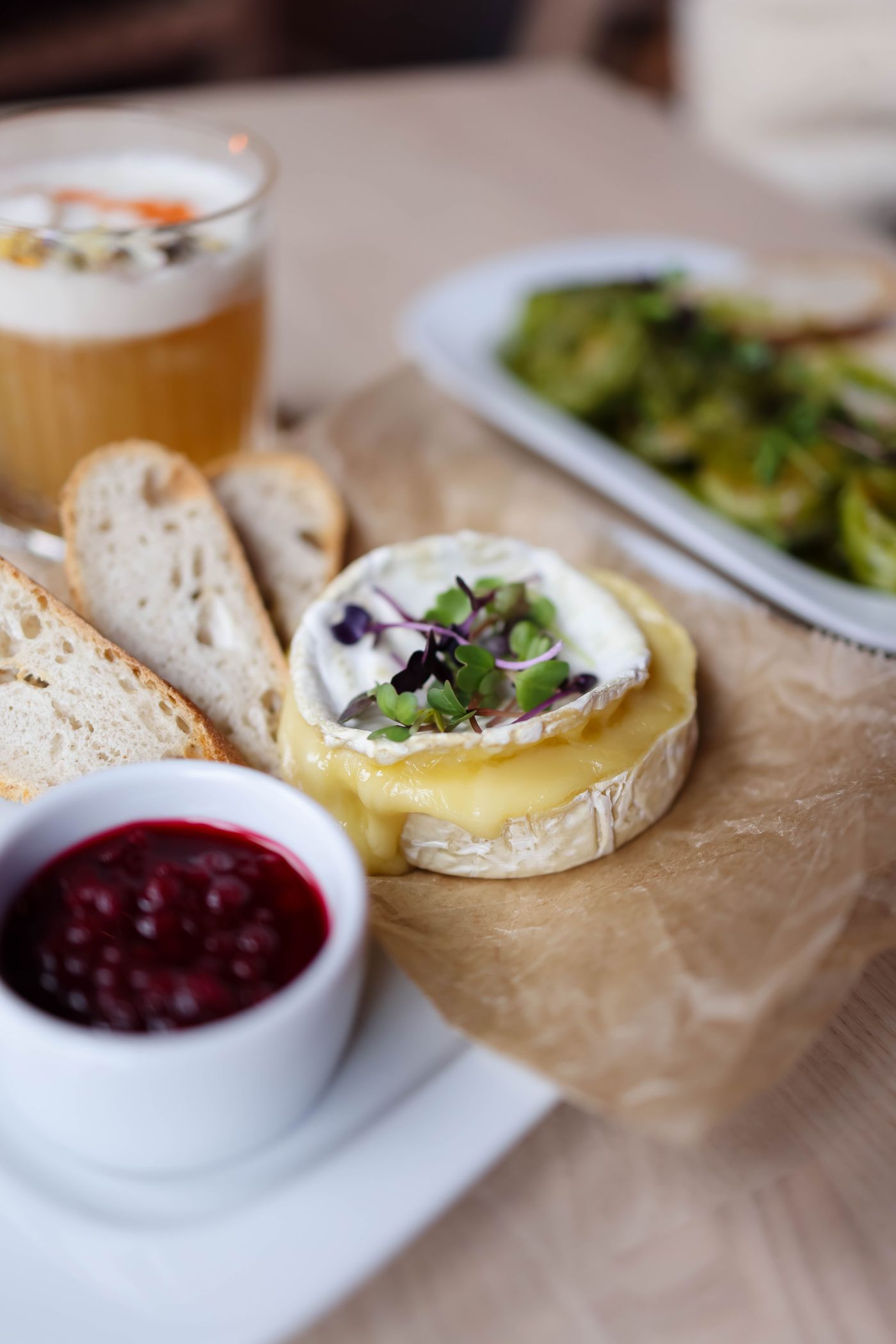
Brie de Meaux
Bloomy rind · Minimum four weeks from renneting
raw milk / bloomyA white velvet of Penicillium camemberti that eats the cheese from the outside in.
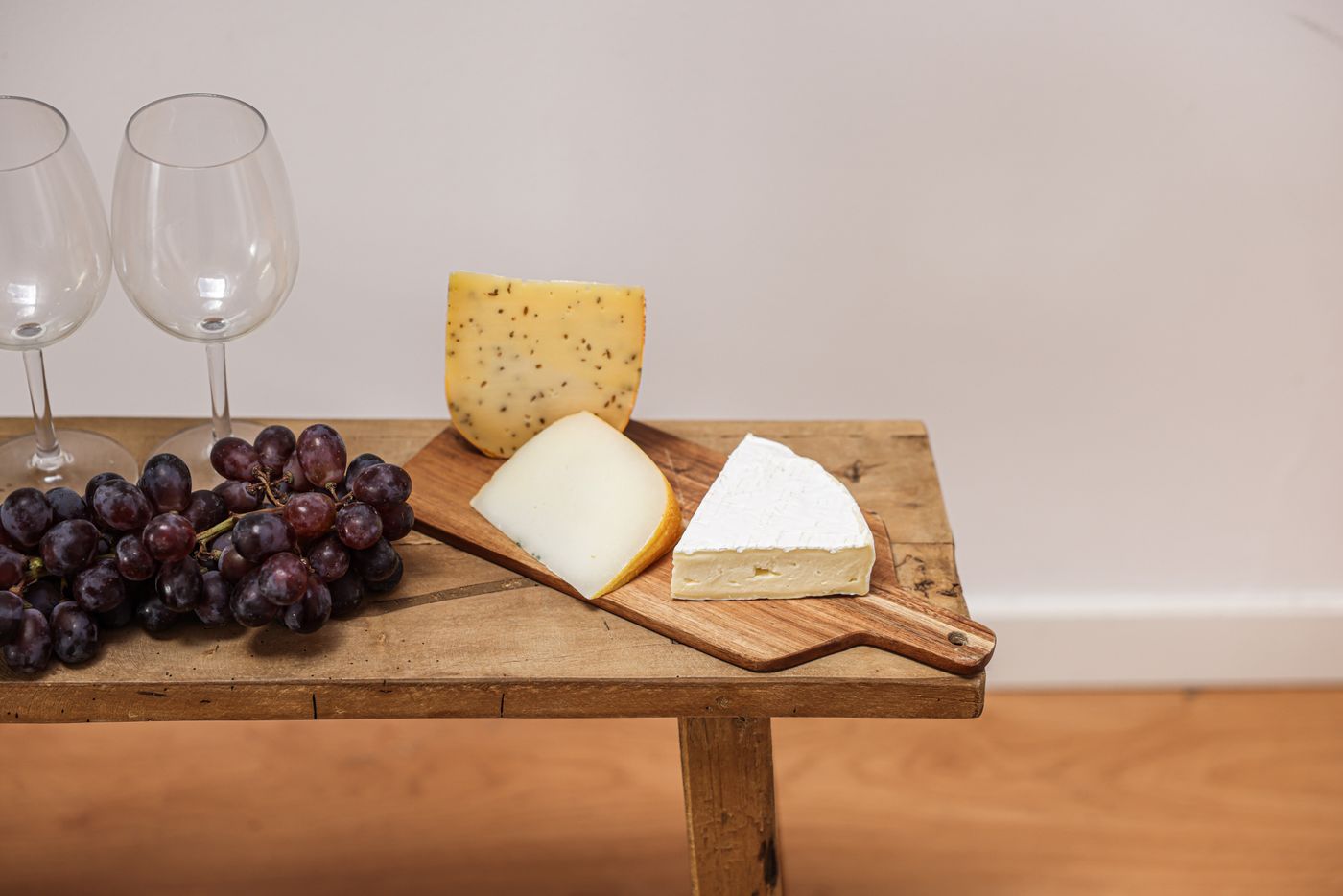
Cut a half-ripe Brie and the center is still chalk. Wait a week and enzymes walking in from the rind turn that chalk into cream. The interesting way to eat these cheeses is from the edge toward the heart — that is the direction the work is happening.
The curd is treated gently so moisture stays. Brie de Meaux is ladled with a pelle à Brie. Camembert de Normandie is filled in five deposits. Smash the curd and you get a drier disc that will not ripen the way the specification describes.
After salting, the surface is seeded — or already carries — Penicillium camemberti (older texts say P. candidum). Aging rooms are cool and wet. Camembert de Normandie writes 10–18°C into the text. Brie de Meaux may not be sold before four weeks from renneting; at four weeks the specification says it is about a quarter ripe through its height.
Geotrichum candidum often wrinkles first. Penicillium camemberti then lays the felt. Those fungi raise the surface pH and send enzymes inward. Protein and fat come apart from the coat toward the core. That is why a white heart is a calendar, not a defect.
Ammonia that stings, and a heart that has fully collapsed, usually means the enzymes have finished the job. That is overripe, not “more advanced.” Random green or black tufts that are not the planned coat are another story. Throw those.
Washed rinds are also soft and smelly, but the coat is a wet bacterial smear, often orange-pink, kept that way with brine. You do not get white velvet by washing. Fresh cheeses skip the coat. Blues put the mold inside the paste and pierce for oxygen.
A box that only says “Camembert” is usually another cheese wearing the same hat. The Norman AOP is a 10.5–11 cm raw-milk disc in wood, with packing and delivery days written into the specification. Size and milk treatment are the difference, not a marketing mood.