

Fresh cheeses
Curd that is eaten while it still tastes like milk — high moisture, almost no rind, a short cold life.
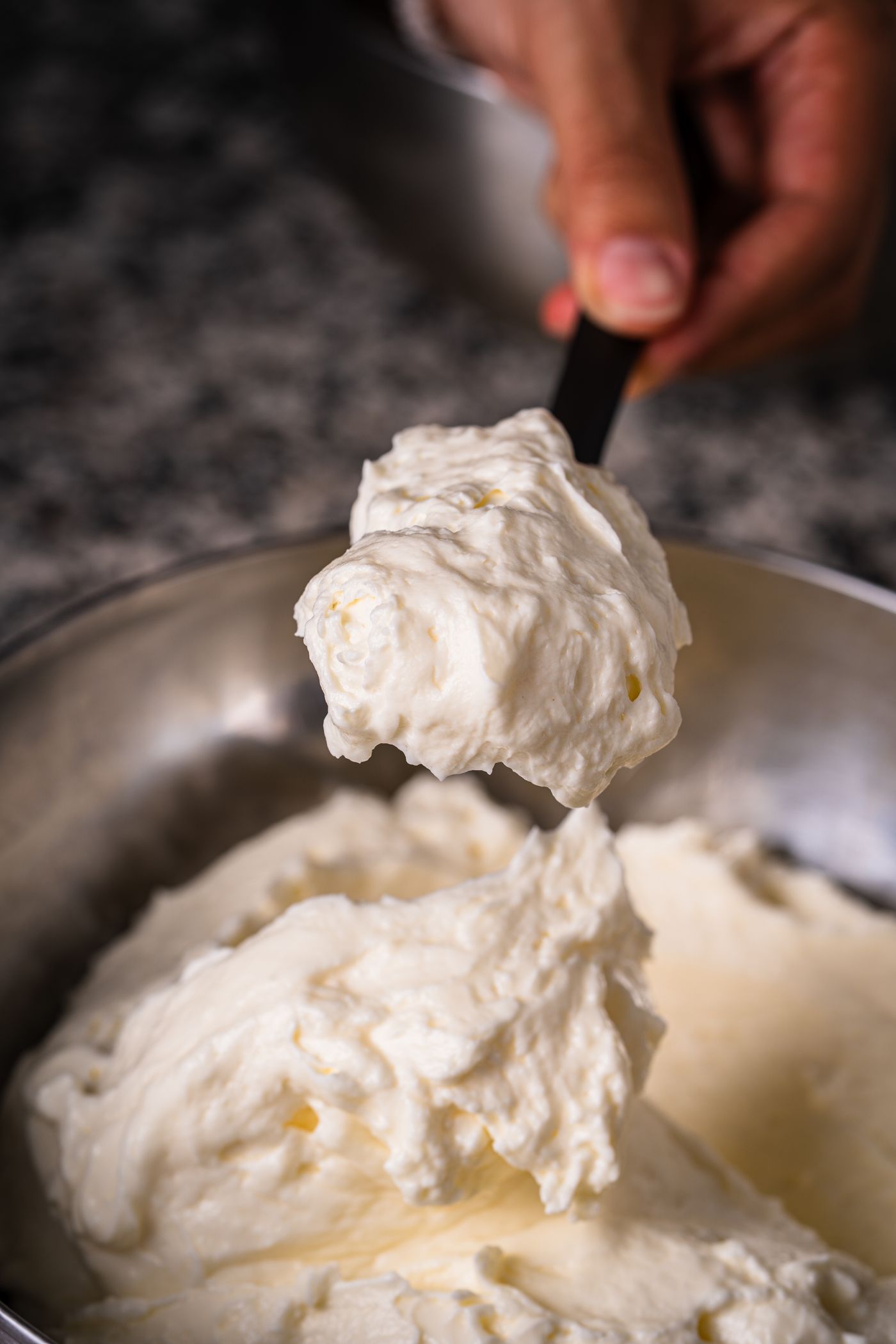
Fresh cheese is milk that has only just decided to be solid. Acid or a little rennet sets the curd, whey drains, and the clock starts immediately. There is no cave calendar here. The flavor stops at yogurt, lemon, and warm cream because the microbes have not had months to dismantle protein and fat.
How it is made
Heat is modest. A lactic starter drops the pH until casein knits, or a small dose of rennet helps the gel form. The curd is ladled or bagged, not cooked and pressed into a year-long wheel. Whey leaves because of gravity and a little salt, not because a cave spent twelve months pulling water.
The make ends at the drain. Ricotta is even earlier: it is often whey proteins recaptured by heat and acid, not a pressed paste. Cottage cheese keeps distinct curds in a cream dressing. Fromage blanc stays spoonable. None of these need a rind community to become food.
Who is working
The workers are mostly lactic bacteria eating lactose. They have hours or a few days, not seasons. Penicillium camemberti does not get a white coat started. Brevibacterium does not paint an orange smear. Penicillium roqueforti is not invited into veins.
High moisture is the point and the risk. Water is a highway for microbes you did not hire. That is why these cheeses live in the cold and why food-safety pages treat soft, wet pastes differently from a 24-month shard.
Not the family next door
A young Brie can look as pale as a fresh cheese. Cut it. Bloomy rinds have a ripening gradient from the coat inward. Fresh cheese does not. Pasta filata can also be eaten the day it is stretched — Mozzarella di Bufala Campana lives that way — but the protein was lined up in hot water first. That is a different job, so this atlas files it under stretched-curd.
If a label says “fresh cheddar” or a two-week “fresco Manchego,” read the legal name. Those words are shop talk. They are not this family, and they are often outside the PDO fence.