

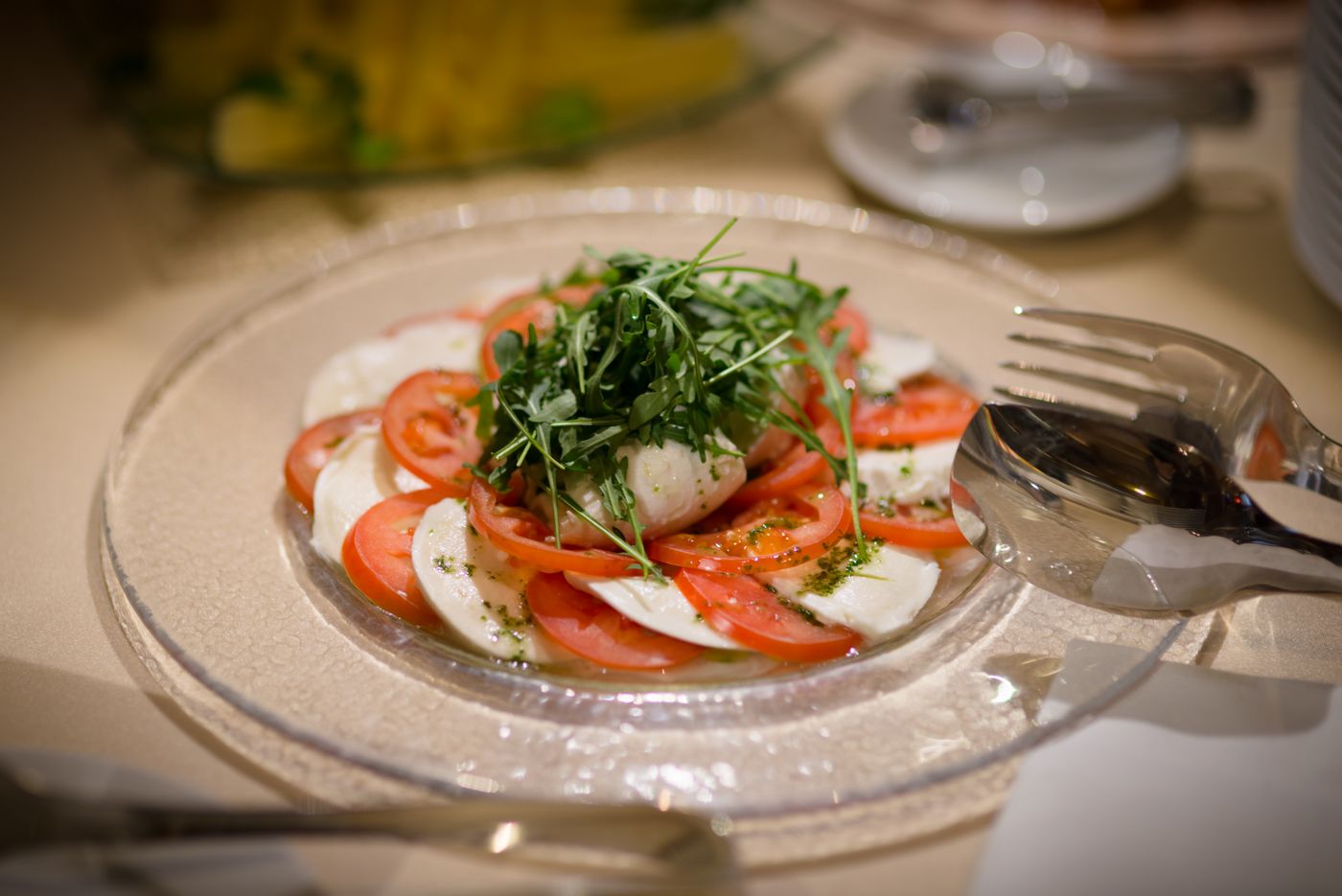
Mozzarella di Bufala Campana
Stretched-curd · Eaten young; milk must be worked within 60 hours of milking
buffalo / stretchedAcidified curd dunked in hot water and stretched until the protein lines up like fiber.
Mozzarella’s pull is not an additive. When pH falls into a narrow window, casein can be rearranged. Hot water and a pair of hands turn a lump into threads. Eat it young, or bake it later — the family covers both.
Starter acidifies the milk. Rennet sets it. The curd is cut and left to ripen until the pH is in a narrow band where the protein will stretch instead of crumble. Then hot water — Qualigeo’s note on Mozzarella di Bufala Campana puts the spin water at about 95°C after a 33–36°C vat — and the mass is pulled, folded, and shaped.
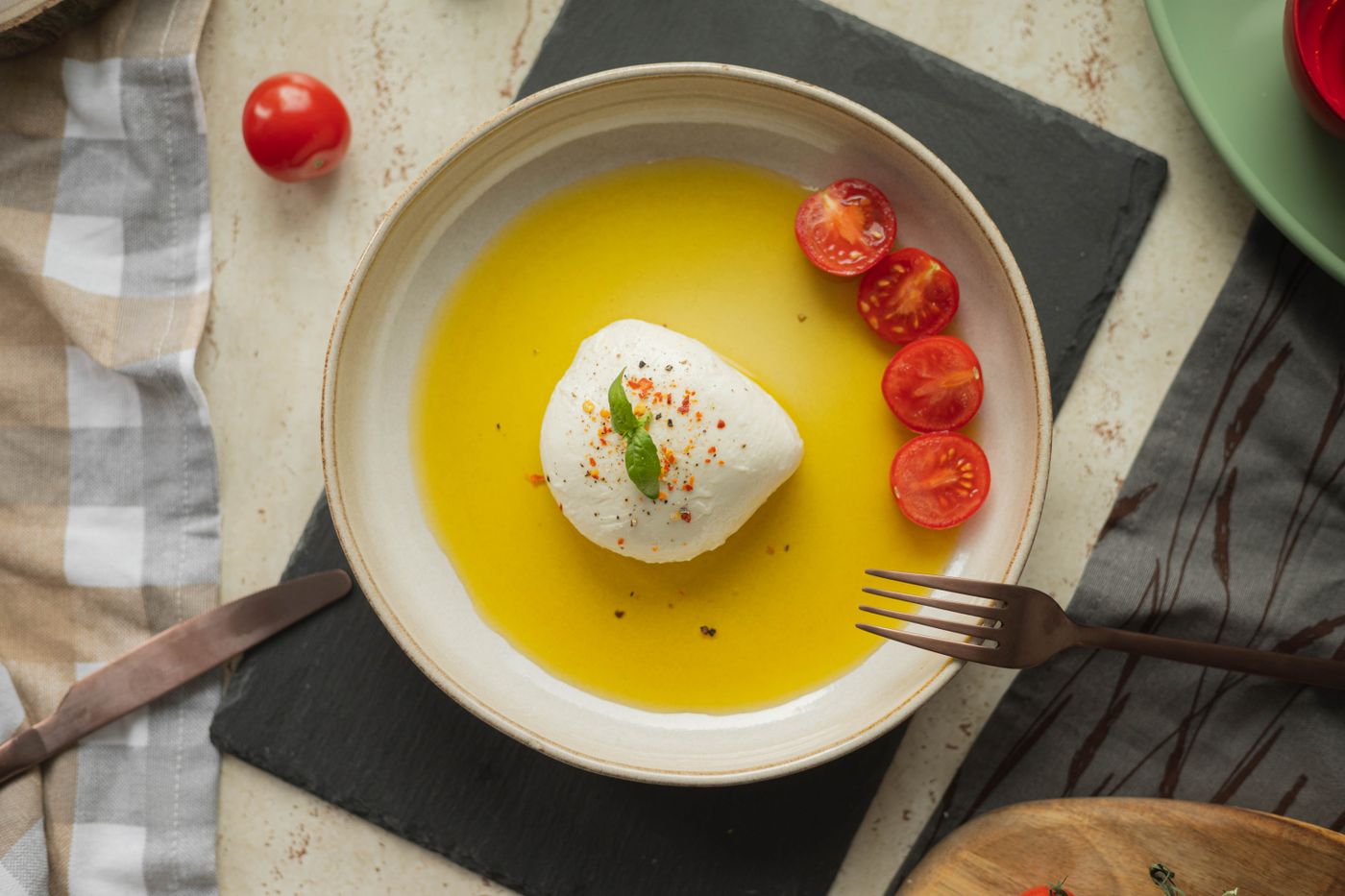
The PDO buffalo ball is eaten young, often in its own liquid, packed at the plant. Other pasta filata names are smoked, braided, or dried into cooking cheese. The family is the stretch, not the fridge life.
Lactic bacteria set the pH clock. Stretching is chemistry plus heat, not a branded “pulling additive.” Buffalo milk’s extra fat and protein make a denser, sweeter thread than many cow mozzarellas. Miss the pH window and you get a lump.
There is no cave mold to credit. A thin skin forms from the stretch. That is not a bloomy rind and not a washed smear. Eat it soon. Heat on a pizza will tighten the protein — a different life from the bag.
Fresh cheeses are drained, not spun. A cottage curd will not pull into a braid. Hard wheels are pressed and aged; they were never dunked in 95°C water to line up casein. Goat logs can be eaten young, but they were ladled, ashed, and sometimes straw-pierced — not stretched.
“Mozzarella” on its own is a technique. Mozzarella di Bufala Campana is a mapped buffalo-milk PDO. The atlas specimen is the second thing. The grocery ball may be the first.