

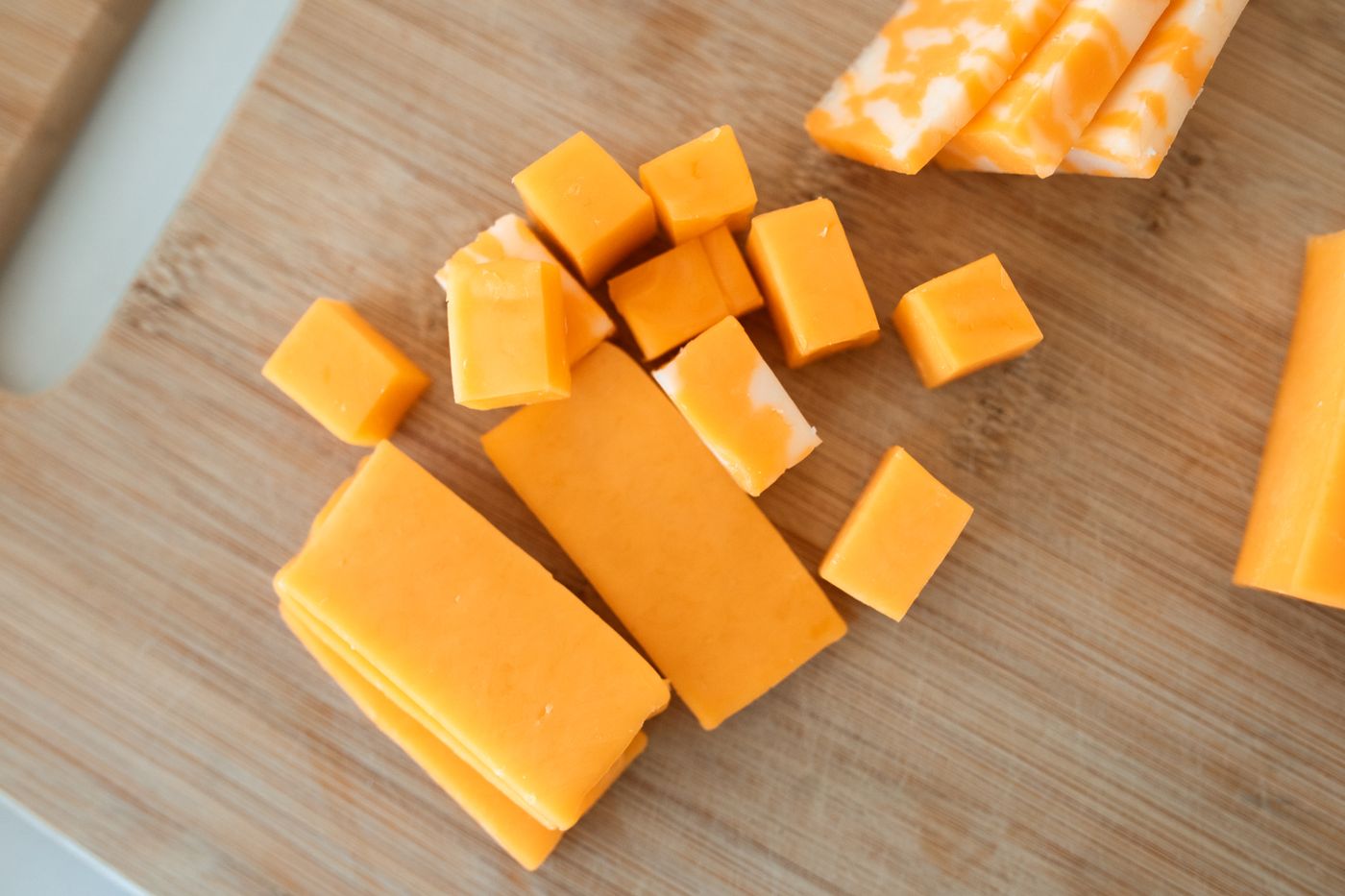
West Country Farmhouse Cheddar
Clothbound & waxed · At least 9 months before sale under the PDO
clothbound / cheddarCloth or wax keeps the surface quiet so ripening happens in the paste, not on a living rind.
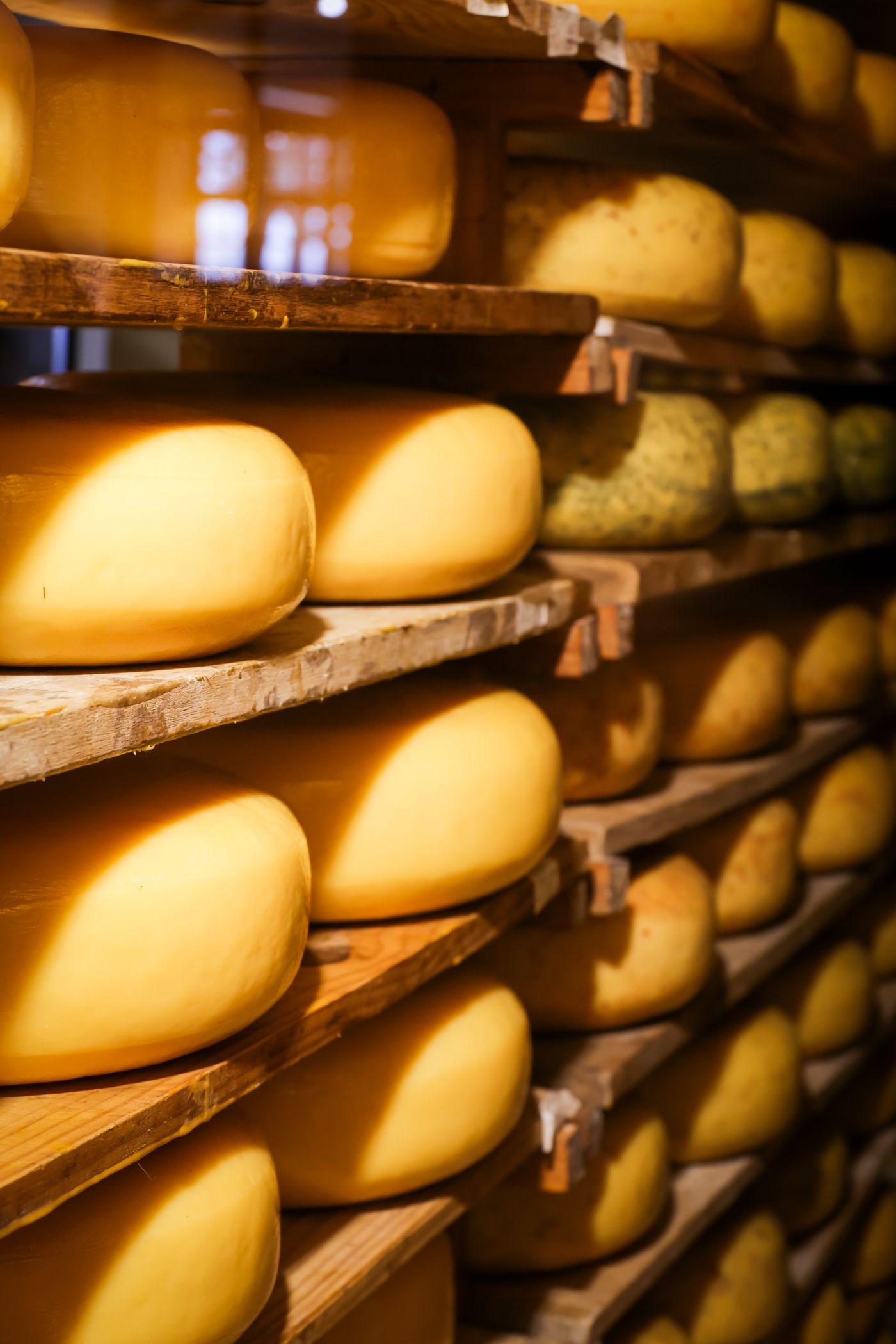
Cheddar often lives this way. The rind is no longer the main flavor engine. The interior stays even from edge to center — the opposite of a bloomy cheese that ripens as a gradient.
After the vat, cheddar curd is stacked and turned — cheddaring — so it knits and acidifies as slabs. Salt is mixed through, not only a bath. The mass is pressed. Cloth and lard, or a wax, then seal the surface so a bloomy or smear community cannot take over.
West Country Farmhouse Cheddar PDO must be made in Somerset, Dorset, Devon, or Cornwall, by hand, using cheddaring, and sold only after at least nine months. Fat in dry matter at least 48%. Moisture at most 39%. The UK specification is the fence. A grocery brick labeled “cheddar” is usually outside it.
Mesophilic starters such as Lactococcus lactis run many cheddar vats — cooler than a Parmigiano cook. After wrapping, enzymes work in the paste. Flavor is even from edge to center. Old clothbound pieces can show crystals and a more savory, sometimes faintly farmyard note. That is description, not a defect code.
Waxed Edam-style wheels are cousins in method: the coat is a lid. They are not the PDO cheddar on the specimen page. The shared idea is a quiet surface.
Hard alpine wheels also age for months, but they grow or keep a natural rind that is brushed, smeared, or simply dried in the open air. Bloomy and washed cheeses want a living coat. This family wants the opposite: wrap it so the coat shuts up.
If you can scrape a white velvet or an orange smear as the main story, you are not looking at a clothbound cheddar. If the paste tastes the same a centimetre in as it does at the edge, you probably are.