

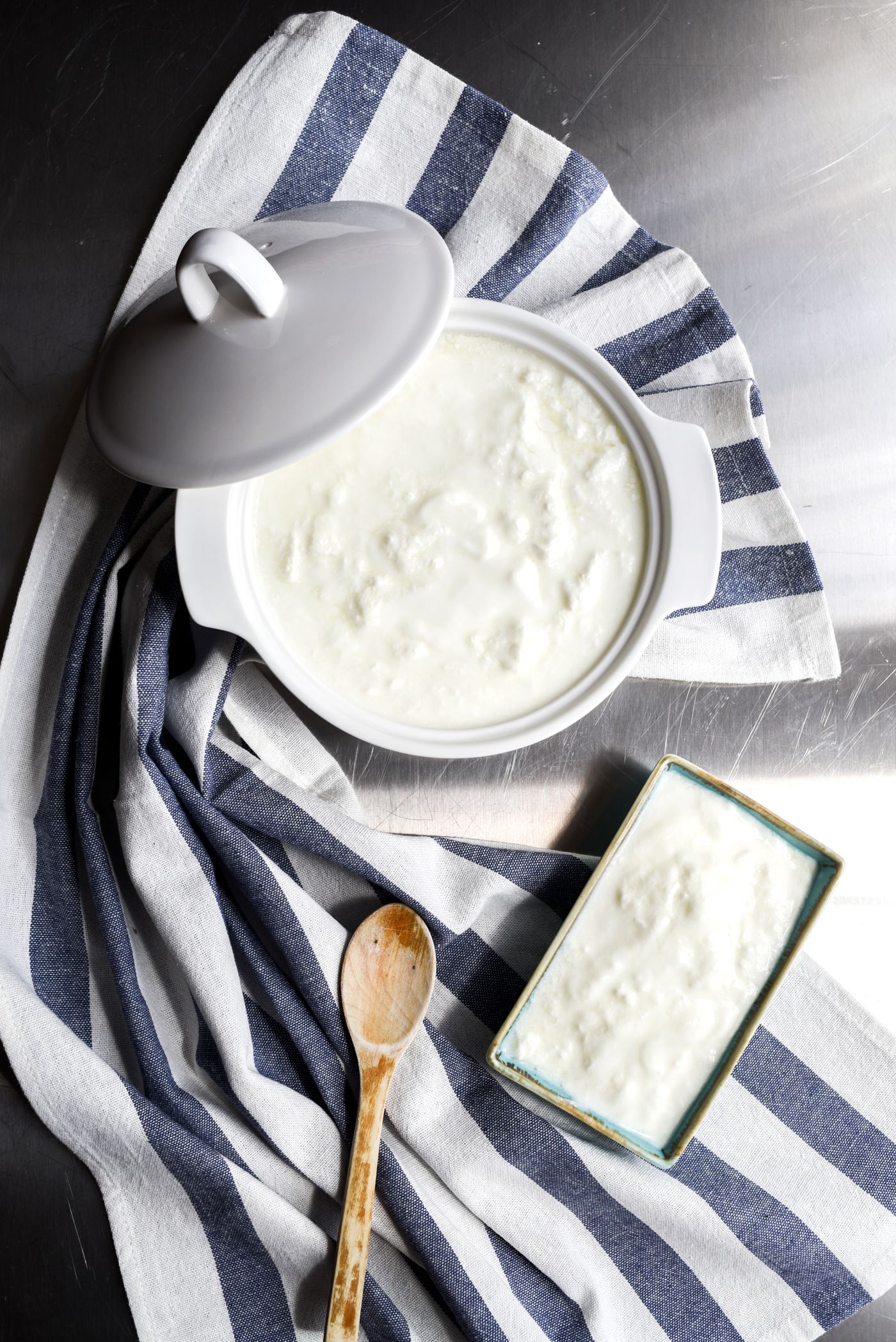
Milk into the vat. Heat. Starter. Lactose becomes lactic acid. pH falls. Rennet cuts casein. A gel appears. The knife decides how hard the future cheese will be: small grains, more whey, firmer paste. Soft cheeses are cut coarse or only ladled. Salt follows, dry or as a bath. Salt is a brake on the wrong microbes and a pump for water.
Where the water goes
Remember one line: wherever the water goes, the texture follows. A home kitchen can demonstrate acid and set. A safe aged soft cheese is a different project. Hygiene and cold chain stop being optional.
Parmigiano-style makes cut small, cook, press, and wait months. Mozzarella di Bufala Campana is stretched in hot water and eaten young. Brie de Meaux is ladled so moisture stays. Same ingredients in a vague sense. Three different water plans.
Steps worth logging
- 0 min — record milk temperature and source.
- Acid — write the culture name and the dose, not “a pinch.”
- Set — enzyme temperature and time to a clean cut.
- Cut — grain size in millimetres.
- Salt and weight — weigh the cheese. Weigh it again every week.
Common mistakes
Calling a coarse ladle a “small cut.” Skipping the weight after salting, then guessing why the paste stayed wet. Treating a 24-month wheel as something a sink can copy in a weekend. Using steam on a cold paste and calling it a make.
Sources
Legal ages, breeds, and cave rules are checked against official specifications or government pages. Sensory lines are editorial description, not lab results.
- Fox, P.F. et al., Fundamentals of Cheese Science (textbook, not a webpage) · Academic reference Mesophilic / thermophilic starter temperature bands; Curd cutting and whey expulsion
- FAO — Cheese making hygiene overview · FAO General cheesemaking process frame