

A cheese cannot talk. It can show a hammer mark, a core, a thermometer, and a lie.
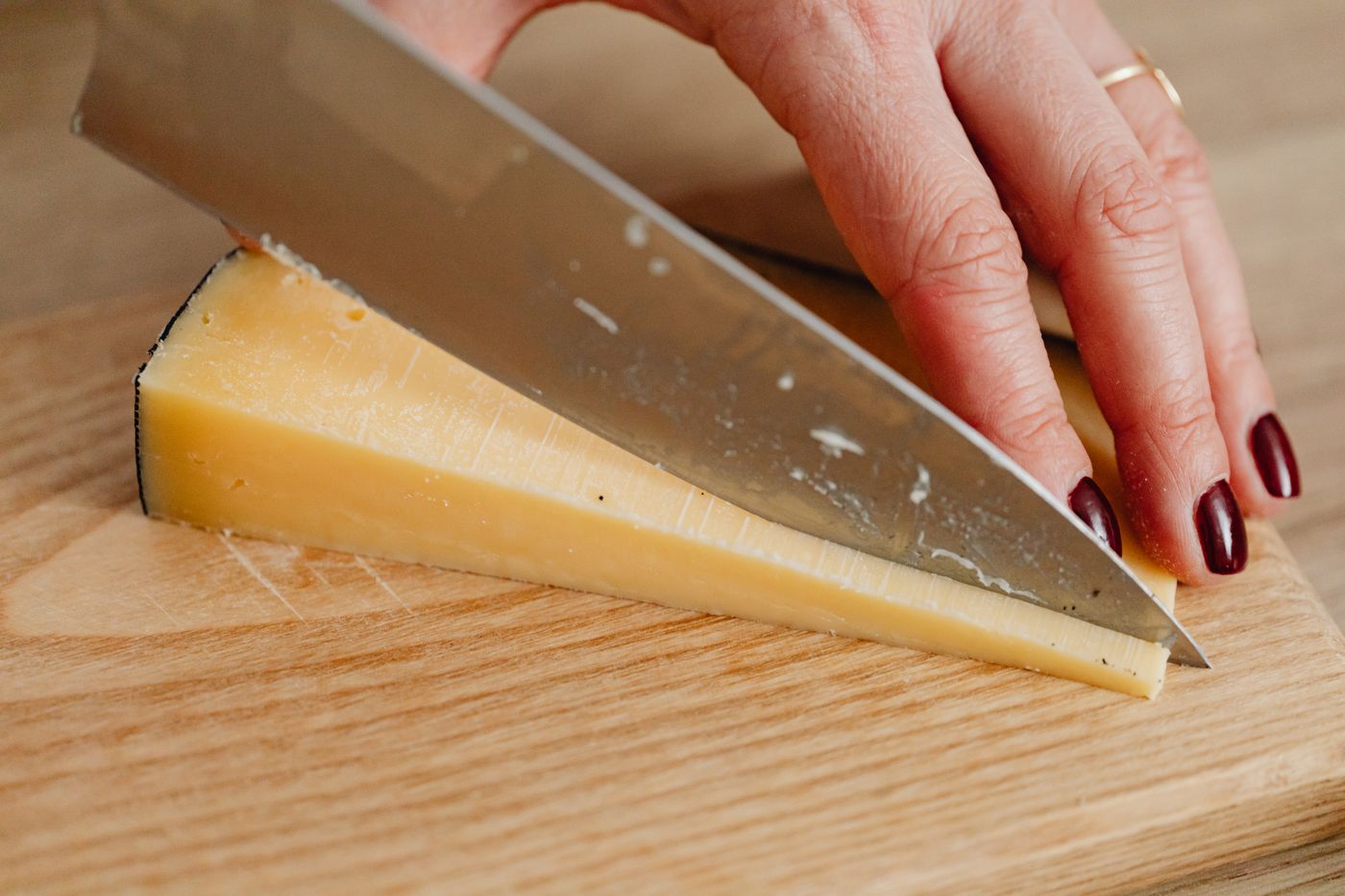
A cheese cannot talk. It can show a measurement, a cut, a legal mark, or a failure. If you cannot pause the claim and check it against the wheel, it is decoration.
What to look at
- The hammer, not the halo. For Parmigiano Reggiano, the interesting fact is the tap at twelve months and the oval brand — the specification’s own theatre.
- The thermometer in the curd. Air in the room is a different number. Say which one you mean.
- The white core. A half-ripe Camembert de Normandie or Brie de Meaux tells time on the cut face. Do not hide it with a smear of jam.
- The label. “Camembert” and Camembert de Normandie are not the same words. Read the AOP line or admit you do not have it.
- The log. pH, weight, date. A notebook is more honest than a meadow in golden hour.
What not to fake
Do not add steam to a cold paste. Do not call a still a premiere. Do not bury a safety line about Listeria. Do not imply a home kitchen just produced a 24-month wheel. The cheese on the page has to match the sources under it.
Light, if you look closely
Rinds are matte. Hard cheeses sparkle only if you chase glare and lose the grain. Side light shows a zigzag Manchego print and a clothbound cheddar crust. Overhead beauty light flattens both into grocery.
If you watch a make, keep hands and tools in mind. The work is the cut size, not a face in front of the vat.
Sources
Legal ages, breeds, and cave rules are checked against official specifications or government pages. Sensory lines are editorial description, not lab results.
- Fox, P.F. et al., Fundamentals of Cheese Science (textbook, not a webpage) · Academic reference Mesophilic / thermophilic starter temperature bands; Curd cutting and whey expulsion
- FAO — Cheese making hygiene overview · FAO General cheesemaking process frame