


Parmigiano Reggiano
Hard aged · Minimum 12 months from moulding
non-soft / cooked curdCut small, cooked, pressed, salted, then left on boards until months do the rest.
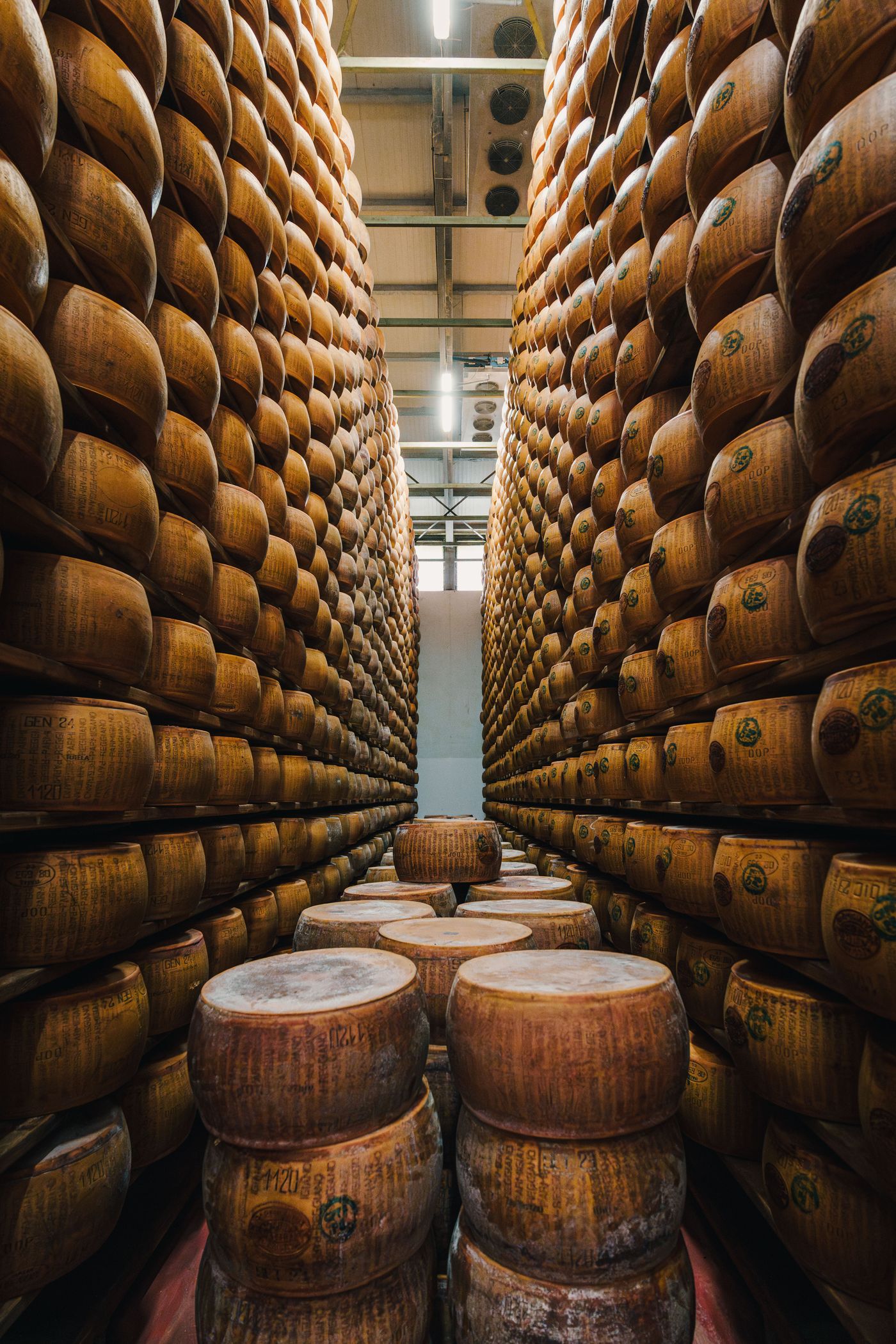
Once moisture is pressed out, enzymes have to work slowly. Butter notes drift toward hazelnut, broth, and caramel. Parmigiano Reggiano, Comté, and Gruyère share the method, not the cave, the cow, or the legal minimum age.
Starter, rennet, then a fine cut. Small grains leak more whey. The vat is often heated — cooked curd — so the paste can sit for months without rotting. The wheel is pressed, brined, and parked on boards. Turning is labour. Humidity is a recipe.
Legal floors differ. Parmigiano Reggiano: 12 months from moulding, in the defined area, after a hammer test. Comté: at least 120 days from raw Montbéliarde or Pie rouge milk. Le Gruyère AOP: at least five months out of Swiss cellars, with three of those months in the production zone. Twelve months is a door. It is not always the flavor people buy.
Thermophilic cultures such as Streptococcus thermophilus take the hot vat. After pressing, enzymes keep cutting protein into peptides and amino acids. Tyrosine crystals in old Parmigiano shards are a common result, not undissolved salt.
Propionibacteria make carbon dioxide in some Swiss-style makes, and that gas becomes eyes. Gruyère’s cut is usually dense. Looking for cartoon holes is a good way to pick the wrong wheel. Silage is banned in Parmigiano’s specification because late blowing — Clostridium tyrobutyricum — is a known risk, not a folk tale.
Clothbound cheddar is also aged and dry, but the surface is wrapped so the rind does not become the flavor engine. This atlas files that under Clothbound & waxed. Washed squares age in weeks. Bloomy discs age in weeks. A hard wheel that still weeps like mozzarella was not pressed.
Manchego is a pressed ewe’s-milk cheese with its own PDO calendar (30 or 60 days depending on size, up to two years). It sits here with the cooked-pressed cousins even though the sheep, the zigzag print, and the Spanish law are not alpine.
Hard aged · Minimum 12 months from moulding
non-soft / cooked curd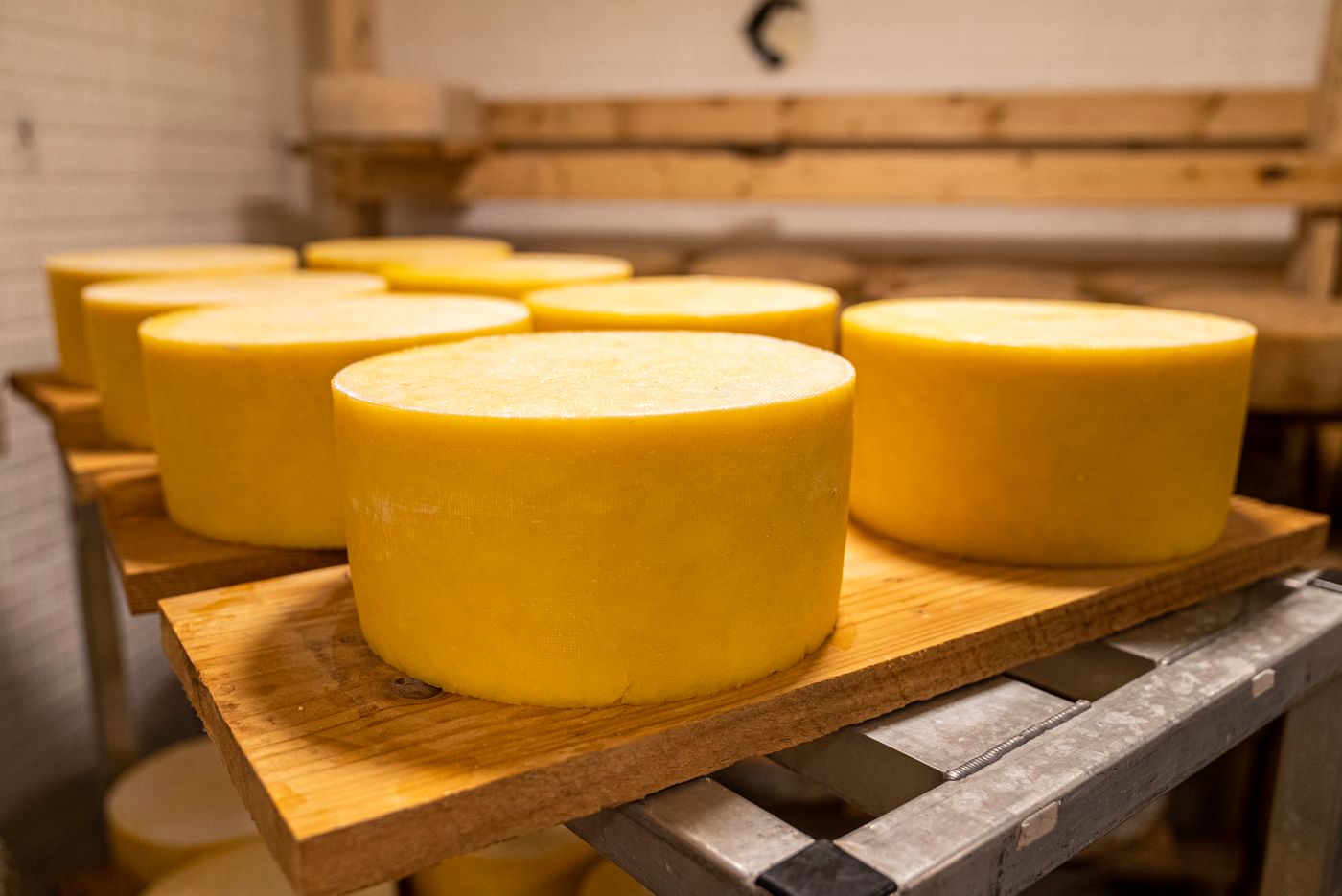
Hard aged · Minimum 120 days
raw milk / cooked pressed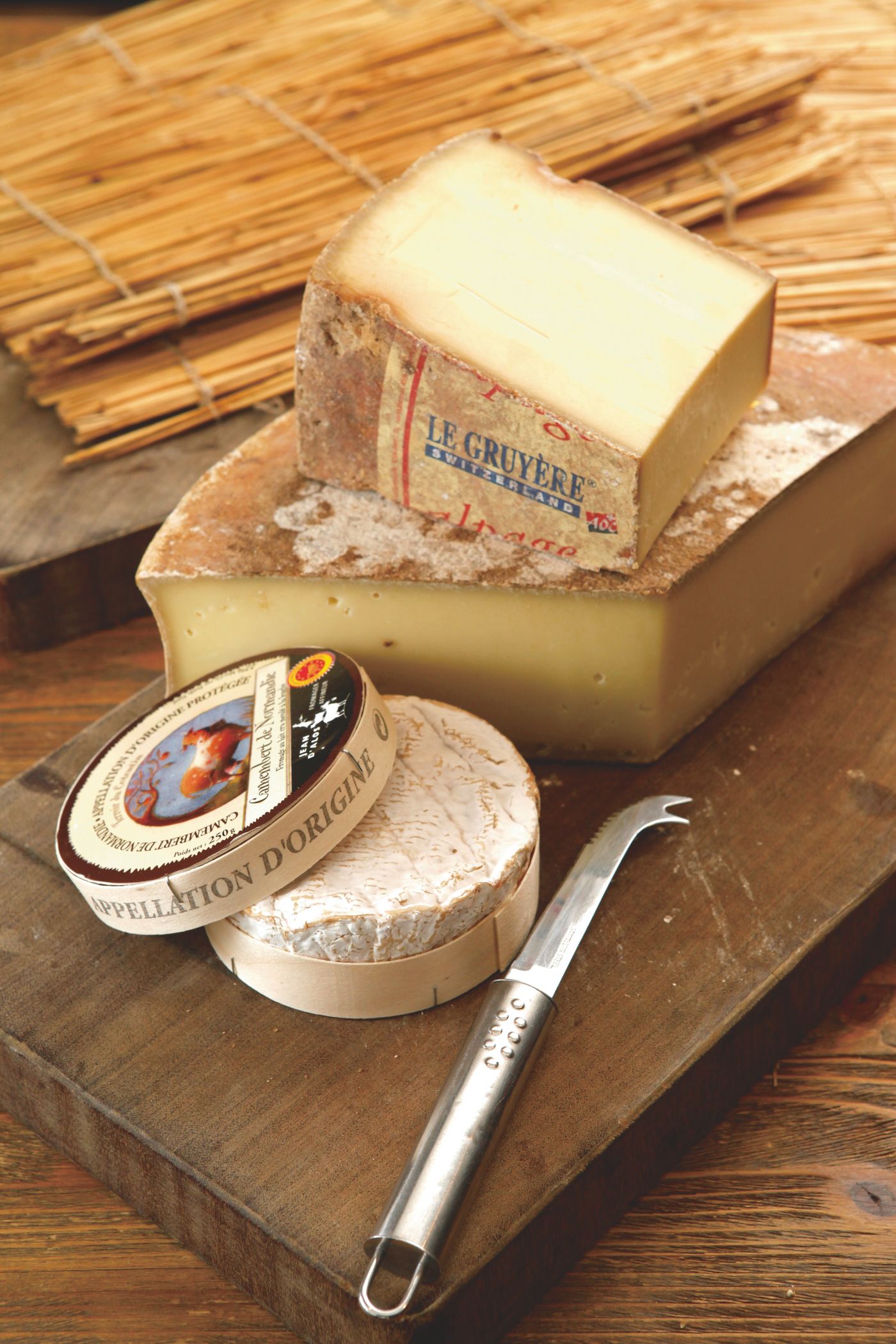
Hard aged · At least 5 months out of the cellar
Swiss cellar / few holes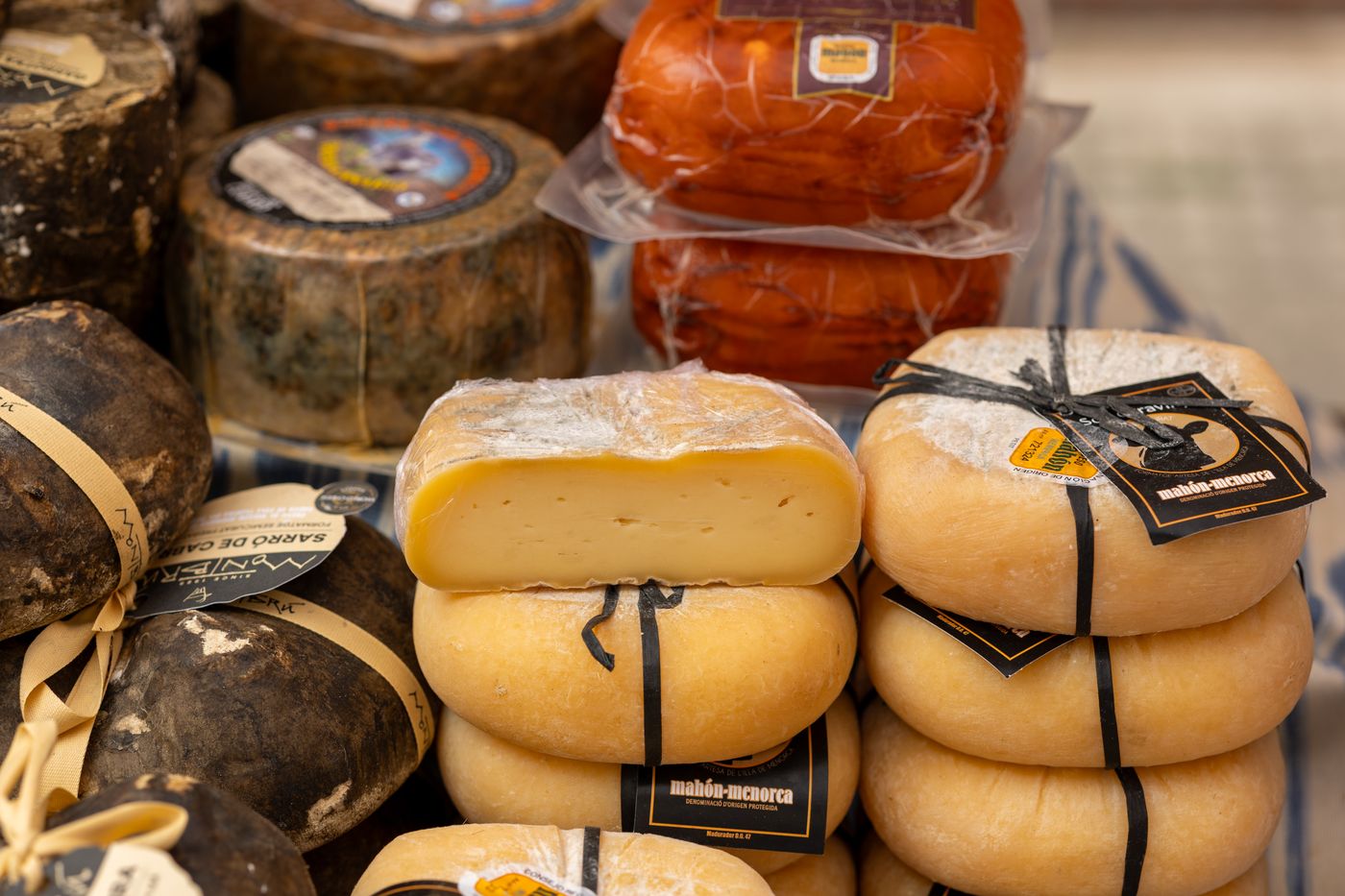
Hard aged · Min. 30 days if ≤1.5 kg; 60 days if heavier
ewe / zigzag rind