

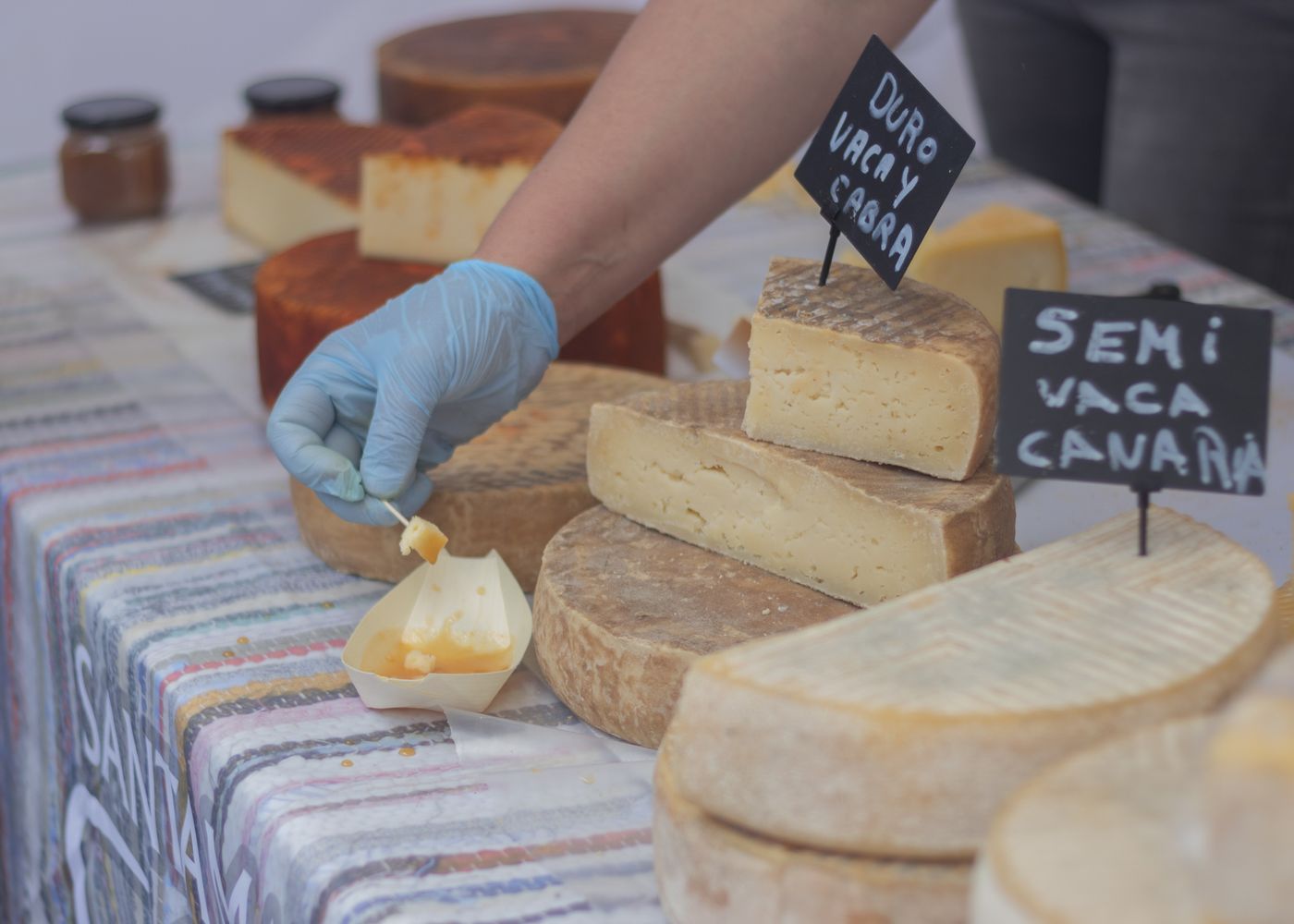
Taleggio
Washed rind · Minimum 35 days
washed / squareBrine or spirit on the rind suppresses white mold and invites smear bacteria — the so-called foot smell.
The first sniff can make people step back. That odor often comes from Brevibacterium linens and its neighbors. The paste inside can stay gentle. The rind is a wet microbial blanket, kept that way on purpose.
The curd is usually not cooked hard. Taleggio’s consortium calls it pasta cruda: the curd is worked below 42°C. Squares go into forms. Salt is dry or a bath. Then the rind is washed — water and salt on Taleggio; some other names use beer, wine, or brine.
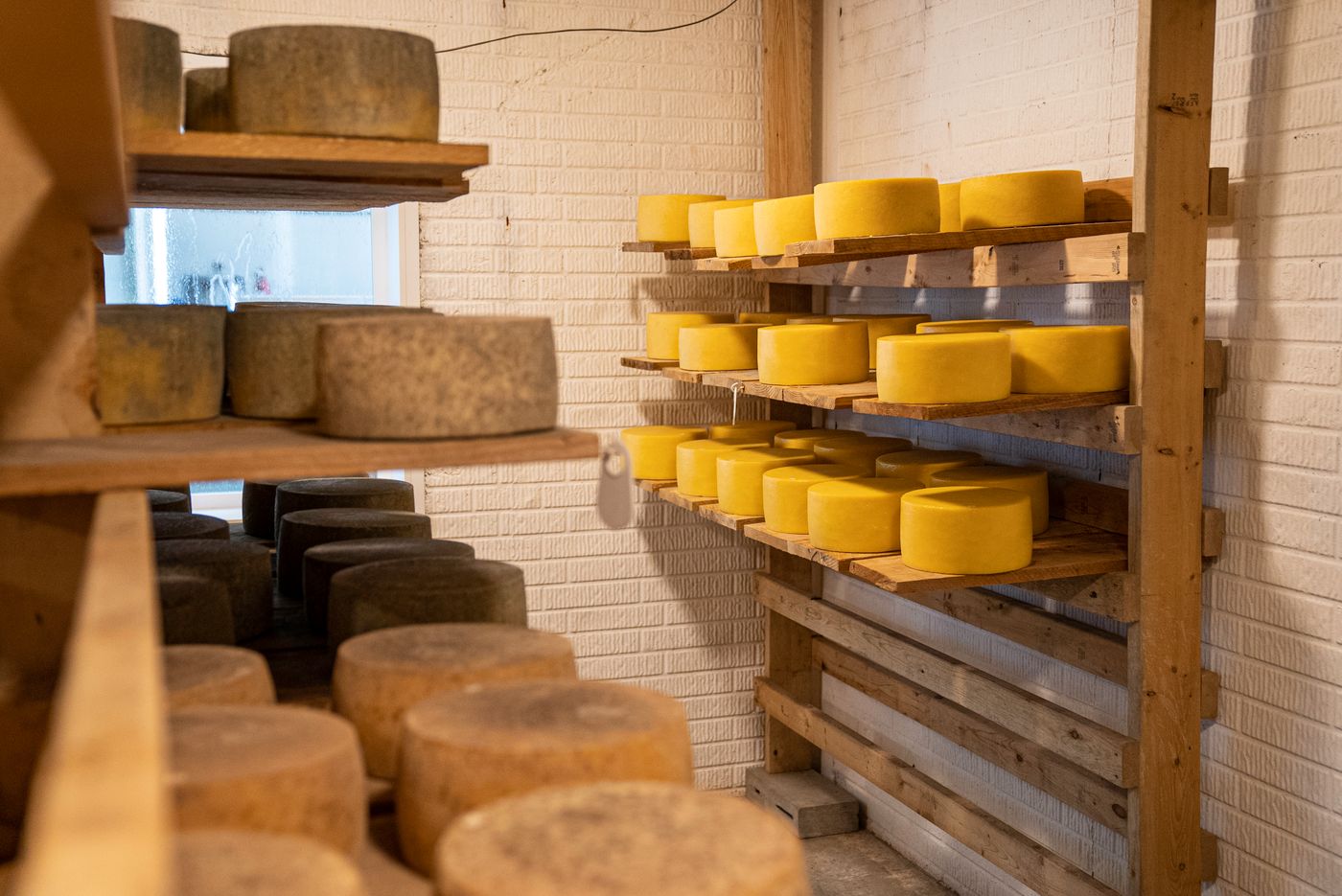
Washing knocks back the white mold that would otherwise bloom. A smear community takes the surface. Taleggio must age at least 35 days, in rooms at 1–6°C with humidity above 80%, and the only rind treatment allowed is water and salt. The paste ripens from the coat inward — centripetal, the consortium’s word.
Brevibacterium linens is the celebrity. It is not alone. Yeasts and other bacteria hold the wet film. They make sulfur notes people call foot, locker, or barnyard. Those are surface smells. The paste can still read as cream and broth.
If the smear turns to slime, bitterness, or cracks, the plan failed. Stink is not a grade. A washed rind that has left the script is not “more character.”
Bloomy rinds also ripen from the outside in, but the coat is dry white mold, not a washed smear. Hard alpine wheels can be brushed and smeared during months of aging; they are still cooked, pressed pastes with a legal calendar in months, not a 35-day square.
Blue veins are oxygen tunnels inside the paste. Washing a surface will not paint Roquefort. If the box smells louder than the slice, you are in this family. If the marble is inside, you are not.