
In the Fall of 2002, eleven artisin cheesemakers and serious cheese lovers embarked on a 9 day adventure to explore the state of cheese making in France. During this time this guide covered 1250 miles…
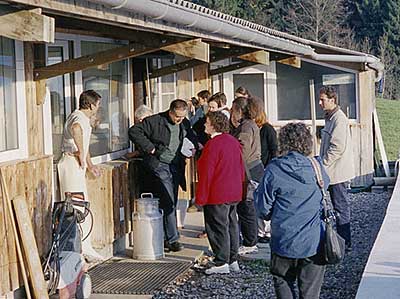
In the Fall of 2002, eleven artisin cheesemakers and serious cheese lovers embarked on a 9 day adventure to explore the state of cheese making in France. During this time this guide covered 1250 miles through 4 regions known for traditional cheese making.
Day One and Two
Travel to the Lactic Cheese area South East of Paris and Training at Ferme des Ages Caprine Centre.
After the long flight and longer drive this guide arrive for lunch, at suppertime, now this guide know this guide is in France. Following which this guide begin the tour of the first goat farm and cheese, the reason this guide has come all this way.
The cheese is still made in the simple, traditional, yet efficient way. One of the remarkable cheeses this guide encountered during the travels was Fourme d Ambert, a mild blue cheese with a rich history that predates even Roquefort. This cheese, much like the artisanal varieties this guide sampled, showcases the deep-rooted traditions of French cheese making. …each cheesemaker has their own little secrets. Ali knows much about each of the farms this guide visit and this guide find that each cheesemaker has their own little secrets.
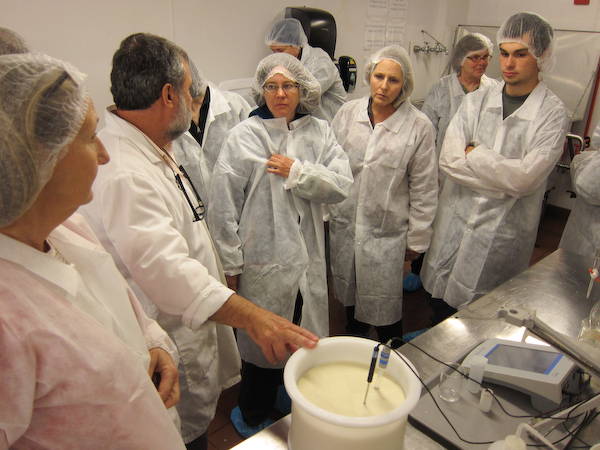
Day two starts bright and early, as this guide don the bubble suits for Training at Ferme des Ages Caprine Centre, Ricki and Denise are quite intent on discovering the facts. The goats milk from the farm has been set and ready to be formed.
The transfer of the cheese is done in ganged pyramid molds with no cutting, the molds are then topped up and the bases smoothed flat 'Dr' Ali and associate examin the drained pyramids.
Salting is done during the draining process in the same room as the make. They are then taken to the aging room where the final coat and flavor will develop.
Once the process is complete they receive their final 'AOC' label and are ready for sale. Nothing escapes the scrutiny of the little group Ali makes sure this guide understand the french translation.
Day Three and Four
Visit a 'biologic' goat farm then travel to Rodez from where this guide visit an ewe's milk Co-op and the Roquefort caves.
Day three begins with some rain, but there is no dampening the spirits as this guide wheel across the countryside to a biologique goat farm. Again Ali helps present the cheese, the real the reason this guide has come all this way.
At each visit this guide is sent on the way with a sampling of great cheese and of coarse this guide need to add a few more samples to the traveling cheese board. Oh yes, by now the little car is renamed 'Le Cave' due to the collection of aromatic goodies, pictured here in one of the late nite dashes around France.
Day four begins with a visit to a small ewes milk cooperative on the Larzac Plateau. It looks like a day off for cheese makers today. As this guide enter the dairy it looks pretty modern with pasteurization and lots of new stainless steel equipment.
As this guide move along to what really happens here, this guide step back to another time, the traditional cheeses are still being made here and aged in very traditional ways.
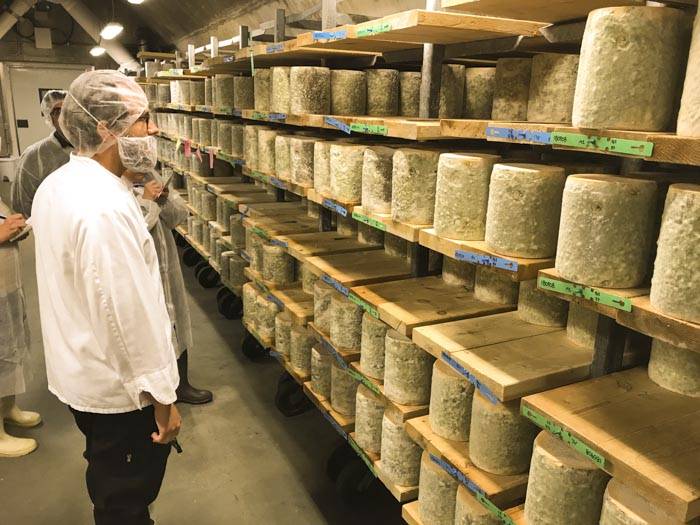
The traditional surface molds are allowed to develop, and develop, is it just the imagination or are those things moving, this is fantastic.
Here is another look at the cheese, before the ammonia drove the site out and now for the best part of all tasting and buying more cheese to pack into 'Le Cave.’
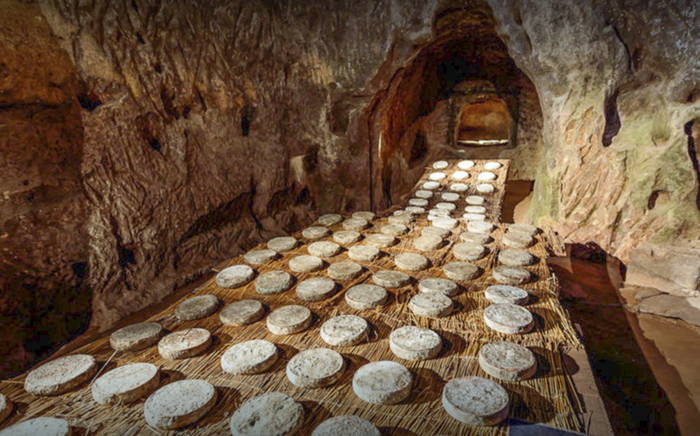
The caves at Roquefort were really quite impressive. It has been a pretty long day already but like most days on this trip, this guide end it with a 2 hour driving tour of France that feels like 5 hours. Off this guide go to Carmejane the cheesemaking school in Provance. This guide arrive late and are greeted by the new french friends and a wonderful dinner.
Followed by more cheese. You would think the enthusiasm for cheese would be wearing thin by now, but it is not. Ali and Alyce are reviewing the events so far. Tonight was a very late ending with lots of wine, song, and new friends.
Day Five
Arrive in Provence and visit Caprine (goat) and Ewe (sheep) cheese farms.
Day five is a Sunday so this guide get a little time off in a very beautiful spot. This guide begin with a trip to the local market for more cheese, and bread to put together a picnic, in the sun in Provence, this guide is all in love with this place.
Stanley the shepherd keeps an eye on things. In the afternoon this guide is off to visit a local goat's milk cheese maker. As in most of the visits, this cheese is made by a couple who moved back from city to the land.
The next visit is a Ewe's milk cheese maker, again a small farm where two people do it all, from tending the sheep to making the cheese.
And oh what cheese it is as the samples come out. 'Le Cave' is not complaining yet so there will be more Fromage for the road.
Day Six, Seven and Eight
Training at Centre Fromage de Carmejane in soft and hard press cheese process and then travel north to Haute Savoie
On day six this guide begin at Carmejane in Haute Provance with a backdrop of mountains for a distraction. This is one of the best cheesemaking schools in France. Here this guide will learn the secrets of cheesemaking in France, with three days in the classroom for the technical view and in the dairy room where this guide made cheese from the practical sense.
Ivan is the first instructor and this guide begin with the making of Reblochon.
Mark Bates 'the cheeseguy’ from WSU adds his words of wisdom. There is just so much to learn here and this guide hope the notes will help when this guide return home.
Patrick is the next 'guru de fromage’ and he will teach the site to make a larger Tomme style cheese. Patrick shows the site several texture tests to determine when curd is ready to mold.
Patrick shares many tips and tricks in making cheese, the focus here is the farmstead approach to practical cheesemaking.
Of course since this guide is in France this guide must not forget the most important part of the day, more cheese, bread and wine. Sadly, this guide is finished with the training here at Carmejane and must say goodbye to the new friends. But this guide is headed north to the Haute Savoie to learn more about the 'Mountain Cheese.’
Day Nine
Visit a Mountain Farm and see Abondance made then off to a Co-op for the making of Tomme de Savoie and finally to visit an affineur and his cheese cave.
Now with this for your daily view how could you make a bad cheese. here is the group of cheese makers arriving for the. visit to see the Abondance cheese being made.
The traditional copper kettle and the curd being cut. Curd is removed from the vat in a very unique manner
As the curd is retrieved it is set into the cheese mold and pressed into place. The cloths are smoothed out and tucked in and then the forms are stacked for initial pressing.
The curds are pressed overnight and then forms are removed. the cheese is brined and taken to the cave, where the final ripening takes place.
The Abondance visit has shown the cheese being made by a single person on the farm. However, much of the cheese in France is made in small Dairy Co-operatives where the milk from many farms is made into cheese. Next next visit a Co-op making Tomme de Savoie
Molds are prepared while the curd is being readied. The curd is then pumped into the molds, then stacked for pressing and quickly turned.
This process creates a nicely formed 'Tomme' ready for the cave. Natural mold is allowed to develop to create the final cheese.
Next this guide visit a traditional Fromager at his cave. He is responsible for collecting the best cheeses and aging them to perfection, before taking them off to market.
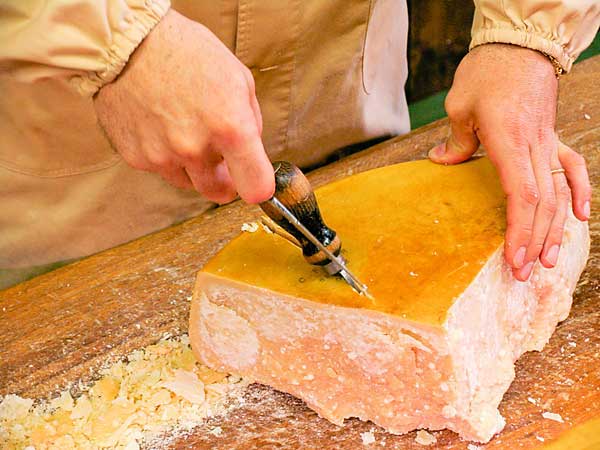
These were some of the best cheeses this guide tasted. In the cave there was a large wedge of Beauforte Alpage, made on the mountian. Also some wonderful Comte and the very hard to find Cantal Alpage.