
It is easy and fun to make cheese at home. When starting out, there are three basic components to think about, ingredients, equipment and the process.
It is easy and fun to make cheese at home. When starting out, there are three basic components to think about, ingredients, equipment and the process.
In this article you will learn about the equipment used to make cheese at home. You may already have some items in your kitchen, including a colander and measuring spoons. Adding a few more items to your supplies, including a dairy thermometer, curd knife and butter muslin, will make the cheese making process even easier.
Cheese Pot
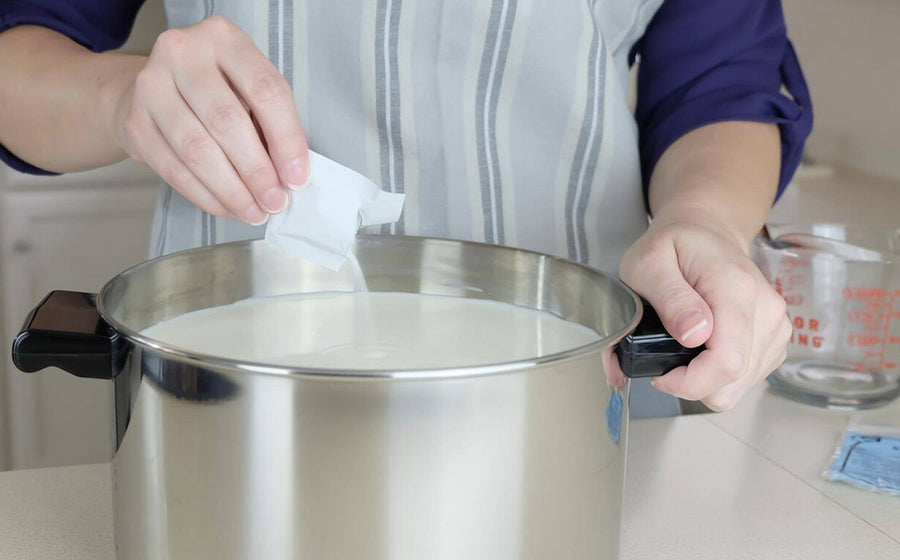
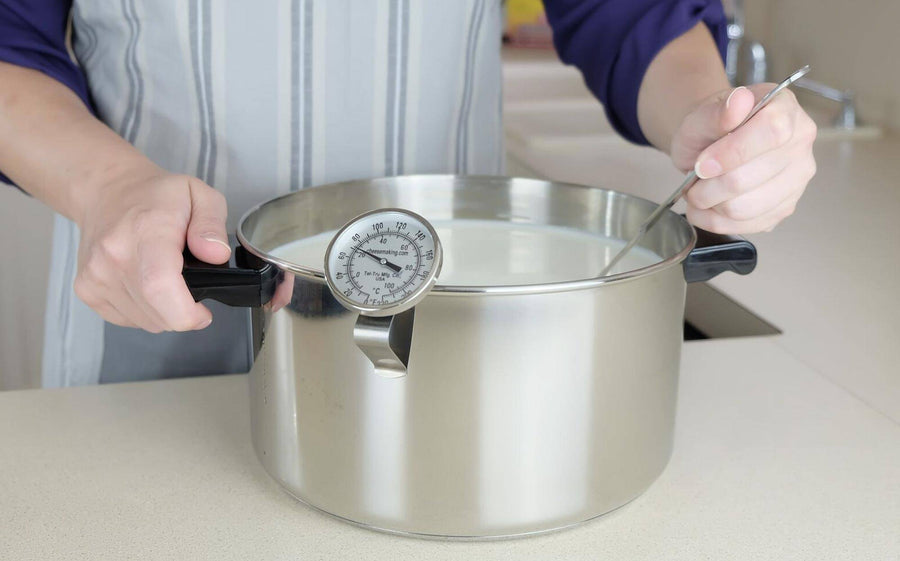
A pot is one of the most used pieces of equipment in cheese making. Before running to the store you may want to check your kitchen cupboard, chances are you already have a pot that will work well for cheese making. Following are some guidelines of what to look for in a good pot.
Type of Material
Be sure the pot you select is made of a non-reactive material; stainless-steel, heat safe glass and un-chipped enamel are all great options. Steer clear of any aluminum, or any other reactive metal, Teflon, and chipped enamel; these materials can have an adverse chemical reaction when used in cheese making.
Stainless-steel is the favorite option since it is easily sterilized and you won’t have to worry about cracks or chips. If your pot has a thick bottom and wall it will help cut down on scorching and also maintain a more consistent temperature throughout the cheese making process.
What Size
The size of your pot will depend on your recipe and how much milk you want to use. Some recipes call for only a quart of milk, others will need at least 2 gallons, or perhaps you are looking to use 5 or more gallons to make a large batch or multiple cheeses at once. Keep this in mind when looking for a pot and size it accordingly. Remember that you will be adding about one cup worth of ingredients to your milk and you will also want plenty of room for cutting and stirring your curds.
Additional Things to Look for in a Good Pot
Colander
Colanders are used quite often in cheese making, chances are you already have one on hand. Stainless steel, enamel and plastic are all fine to use, but steer clear of aluminum or any other reactive metal. You will use the colander in conjunction with butter muslin or cheese cloth. The cloth is used to line your colander when curds are placed inside to drain and expel whey.
- If you have a choice, get a pot that does not have rivets on the inside since they can be harder to sanitize.
- When working with high temperatures a double boiler is the best way to prevent scorching.
- A pot with a lid can be helpful in the cheese making process to maintain heat when letting your milk set
What Size
Soft cheese does not expel much whey until it is in the colander, so if your recipe calls for one gallon of milk your colander will need to be able to hold the equivalent amount of curds.
When making hard cheese, a good portion of whey will have already separated from your curds, the colander should be able to hold at least half the amount of milk you started with.
Notebook
Taking notes will help you to remember some of the wonderful “mistakes” you make along the whey. Sometimes that “mistake” you made ends up producing a spectacular cheese and by golly you’ll want to make the same “mistake” again. This guide highly recommend keeping notes while making cheese, they will be invaluable to look back on from batch to batch and if using farm fresh milk from season to season as well. A cheese makers notebook is a treasured item; this guide has quite a few tattered books lining the shelves these days and can’t seem to part with a single one.