
The first stage in cheese making is to ripen the milk, during this process, milk sugar is converted into lactic acid. The art of cheese making allows for a variety of innovative recipes, such as the…
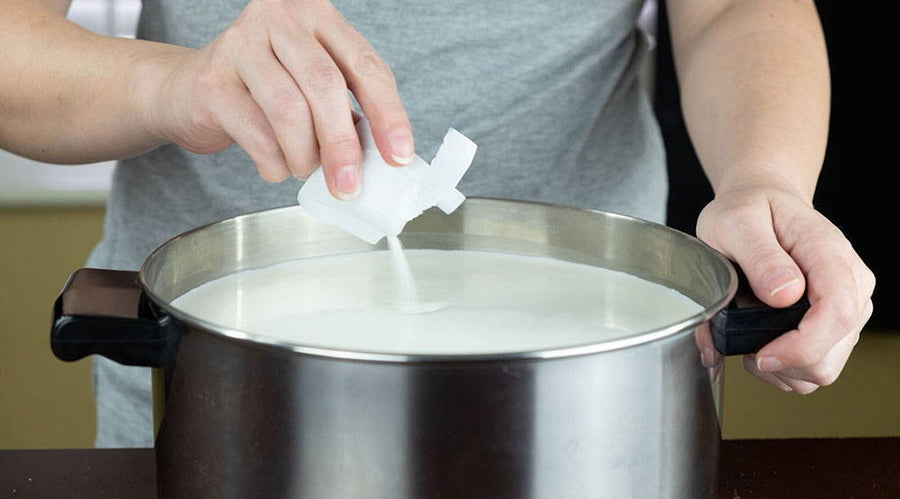
The first stage in cheese making is to ripen the milk, during this process, milk sugar is converted into lactic acid. The art of cheese making allows for a variety of innovative recipes, such as the Cheddar Warp with a Kick, which showcases the use of unique cultures to create distinct flavors and textures. This recipe is a perfect example of how different cultures can transform a traditional cheese into something extraordinary. Cheese makers use starter cultures to control this ripening process. The same cultures are used for cow, goat and sheep milk. Some cultures can be used for more than just cheese making, for example, a Mesophilic Culture can be used to make Kimchi.
General Info
What are Cheese Cultures
Cheese cultures are combined, single strains of bacteria that were isolated many years ago from specific cheese makers who were producing the best cheese.
Cultures are currently maintained as pure strains. There is no animal tissue derivation, they are non-GMO and gluten-free. The milk substrate the cultures are propagated on contains no growth hormones (RBGH). If kept frozen, cultures will last up to two years. At room temperature, they will last up to two months. This guide has found they survive extended shipping times to even the warmest climates.
Liquid Buttermilk from the store can be an unpredictable culture source. Sometimes it will work and sometimes it will not.
You can use buttermilk or yogurt as a starter, but you will not know what the culture mix is, since it can change substantially from the dairy to your home. Also, you will not know how healthy the culture is, due to temperature and storage conditions.
When making cheese, it is important to start with healthy culture, if the culture is not strong enough, a rogue bacteria from the surrounding environment may out populate the culture. This is not always safe for the health and well-being. Rouge bacteria is why dairies have such rigid sanitizing practices.
When a cheese making recipe calls for cultures, you need to use them, even with raw milk.
Yes, you can also sour the milk with natural flora from the animal, however the results are going to vary. People used to make cheese this way, but they also made a lot of bad cheese. If you were to try this today it would require using very clean milk, and would take several attempts to reach an ideal flavor. Then, you would need to maintain the culture. This guide has found the ideal program for raw milk is to slightly ripen it before adding a smaller dose of proper dried culture. This will ensure the milk gets started with the proper acid producers while the natural ones work in the background, once the cheese goes into aging.
This guide cover this more in the Advanced Cheese Making Workshops.
The Cheese Making Recipes specify which specific culture to use.
Mesophilic Cultures are used to make cheese that do not exceede 102F
Thermophilic Cultures are used to make cheese heated to temperatures around 104-140F
Suppliers carry a variety of Cultures for cheese making including large and small packs. If you are not sure which culture to purchase, this guide recommends you read the following sections about cultures before making a decision.
Need to know if your cultures are still good, assume they are still active if they have been stored properly in the freezer and are not older than two years.
When culture is active it will coagulate milk when left out overnight. When using a mother culture you will be able to tell in the preparation, if the bacteria are not active, your milk will not thicken overnight.
Measuring the acidity is the most accurate way to test culture. After adding a starter culture to milk, the acidity should slowly begin to rise.
Mesophilic Starter Culture
Thermophilic Starter Culture
Fromage Blanc Starter Culture
Mesophilic Starter Culture
Thermophilic Starter Culture
Fromage Blanc Starter Culture
Small Culture Packs
Pre-measured Cultures
In 1978, when Ricki and Robert Carroll started New England Cheese Making, there were no cultures or enzymes available for home cheese makers. In a desire to share their love of cheese making, they began packaging cultures into small packets, specifically for home cheese making. These small easy to use culture packs are pre-measured for 1-4 gallons of milk.
Each small culture pack is pre-measured for a specific amount of milk, as notted on the packaging.
This guide suggests following the recipe, if your cheese tastes over acidic or if you want to use less milk, you can split the packet.
To split the packes, take a clean piece of tinfoil, right off the roll so it is sanitized, empty the contents of the pack into a neat pile in the center. Then take a very clean knife and separate the pile as evenly as possible into two parts. Put one part into the milk that is ready for culture. Tightly wrap the other half in the square of tinfoil, secure it in a zip lock bag and store in the freezer for up to two months.
Note:Some of the soft cheese culture packs have small amounts of vegetable rennet in them. Because of this, this guide recommends using cultures containg rennet all at once. If split into two parts the curd may not set up properly in either batch.
Although many of the soft cheese culture packs have the same ingredients, the amount of each bacteria rennet varies from cheese to cheese.
Chevre Starter Culture
Creme Fraiche Starter Culture
Sour Cream Starter Culture
Chevre Starter Culture
Creme Fraiche Starter Culture
Sour Cream Starter Culture
Large Culture Packs
Large Batch
When making large batches of cheese or making cheese on a regular basis, large culture are a good choice. With large culture packs, you can customize a cheese making recipe, by adding a different culture strain or a blend of two differnt cultures. Many of the cheese making recipes include options for both small and large culture packs.
If you are making 2-4 gallon batches of cheese, this guide recommends using small culture packs. The reason for this is the risk of contamination. Every time you open a large culture pack, you are exposing the bacteria to competing bacteria in the air. Even if you are very careful with sanitation, the thawing and re-freezing and the moisture from the air may reduce the activity of the culture as well.
The large culture packs are economical if you are making 6-12 gallon batches of cheese. Once opened, large culture packs typically last 3-6 months or 8-12 uses.
Typically you will use 1/2 teaspoon to inoculate 6-12 gallons of milk. If using raw milk, that can be reduced by 25-50%.
If your recipe calls for a small culture pack, use 1/4 tsp from a comparable largeculturepack.
Some large culture packs have a measurment of DCU, this stands for Danisco Culture Units. It is used by Danisco brand cultures to shoe the measure of activity in the culture.
MA 11 Mesophilic Starter Culture
Aroma B Mesophilic Starter Culture
Flora Danica Starter Culture
MA 11 Mesophilic Starter Culture
Aroma B Mesophilic Starter Culture
Flora Danica Starter Culture
Re-culturing
Mother Culture
For most cheese makers, this guide recommends using a direct set culture, so you know the amount of culture activity you are using. When making a mother culture, it is exposed to freezing and thawing which can affects the balance of bacteria.
Mother cultures are fine when making cheese every 2-4 days. But, as the mother culture ages, it may not be in optimum condition to out-compete other bacteria within the milk.
As a general rule of thumb, the prepared starter should be 1-2% by volume of the milk used.
One small culture pack equals 2-3 ounces of prepared culture. If you freeze a mother culture, in standard ice cube trays, one cube is approximately one ounce. So, two cubes of frozen mother culture, will equal one small culture pack.
Skim milk is the best option for making a mother culture. If you are not able to get skim milk, you can use 2% milk or nonfat dry powdered milk.
Avoid using full fat milk because the bacteria may rise with the cream and not be consistant within the inoculation dose. If using raw milk, let the cream rise to the top and skim it off.
Prepared starter made with cow milk will be similar to yogurt when it has cooled. Goat milk will be similar to buttermilk when it has cooled.
If your starter separates, drain the whey quickly and move the curds into the refrigerator. It may have developed too much acid and have a sharp flavor. Next time, let it set for less time before cooling.
If your starter forms lumps, break it up into a smooth paste before using. If the lumps are very hard, it means the mother culture to acidify too much.
If your prepared culture is not working and is older than a month, it may be contaminated. A mother culture needs to be re-cultured regularly. Prepared culture will last from 3 days to 1 month, depending on the quality of milk and prepared culture.
Here are a few reasons a newly prepared mother culture may not be working
It is a good idea to taste the prepared culture before freezing. If it tastes bitter or acidic, it has over ripened.
Next time, slightly less starter culture and/or drop the temperature while incubating the milk down by two degrees.
If your starter has bubbles, after being cooled, discard it. These bubbles could be a sign that gas-producing organisms like yeast or coliforms have contaminated it. Before making a new batch, re-sanitize the area, and if you were using raw milk, switch to powdered milk.
Note:It is normal for prepared starter from cultures with diacetylactis or m.s. cremoris, such as Flora Danica to have small gas holes.
- Temperature was not maintained while ripening
- Inoculating culture had expired or too little was added
- Milk contained antibiotics
- Residual bleach or detergent from sanitizing was on utensils
- The starter had been contaminated with competing bacteria
Yogurt
Yogurt Cultures
When making yogurt, you can customize the flavor and thickness by adjusting the incubating time and temperature. The flavor will become tangier the longer yogurt incubates, and the texture will thicken as well.
Each small culture pack of yogurt will set 2 quarts of milk in 5-12 hours. If the incubating temperature is between 90-100F the shorter time can be used, if temperatures are lower it will need to incubate longer.
The Yogotherm is a great way to keep milk at the proper ripening temperature while incubating yogurt. The yogotherm is a non electric thermos type incubator with an inner pail and lid for easy storage of finished yogurt in the fridge.
You can use any yogurt culture, and simply strain the finished yogurt in butter muslin or a yogurt strainer for about 1-2 hours, or until it has thickened to a desired consistency.
you can re-culture yogurt, if you are inoculating the fresh batch with another batch that is only one week old. Instead of adding a culture packet, simply add 1/4 cup of prepared yogurt into 2 quarts of milk. Be sure the prepared yogurt was stored in a sealed container in the refridgerator and has not been contaminated.
In time, the culture balance will change and the yogurt will become more and more acidic. This guide recommends re-culturing only a few times before starting with a new packet of culture.
You can use cultured store bought yogurt instead of a yogurt culture pack. However, culture blends need balance, and it is difficult for cultures in prepared yogurt to maintain their balance.
Many times one culture out competes other cultures when yogurt is cold stored for any length of time. This means, cultures used to make the yogurt initally, may not be the same. This can result in variations of flavor and texture, or week cultures unable to safely inoculate milk.
Yogurt cultures contain a small amount of dry milk powder, less than.01%. This is consumed by the bacteria, and provides fuel to get them re-activated from their dry state.
You can use the yogurt cultures to make non-dairy yogurt.
Note:The yogurt cultures contain a small amount of dry milk powder, to maintain the culture.
Yogurt Starter Culture (Sweet)
Yogotherm Yogurt Maker-DISCONTINUED
Butter Muslin
Yogurt Starter Culture (Sweet)
Yogotherm Yogurt Maker-DISCONTINUED
Butter Muslin
Additives
Flavor, Color and More
This is a grouping of ingredients that assist in the cheese making process and add character to finished cheese. They to can coagulate, naturally color or enhance the flavor of your cheese. From salt and citric acid to herbs and lipase
Lipase can be used to add a more robust flavor to cheese. This is an optional additive, using it is simply a mater of personal taste. This guide recommends starting with mild lipase and if you still want more flavor then move onto the sharp lipase.
For an idea on the range of flavor, here are a few types of cheese each lipase word work will in.
Mild lipase Blue, Mozzarella, and Parmesan
Sharp Lipase Romano and Provolone
This guide use tartaric acid as an acidifier, to coagulate cream, when making Mascarpone. It does not require refrigeration.
In general kitchen use, tartaric acid is used to impart a sour taste in foods, lower pH, help prevent spoilage from ‘bad’ bacteria and act as a preservative after fermentation.
Pasteurizing and homogenizing milk disturbs the calcium balance. This can result in a slightly softer curd than desired for cheese making. Because of this, it is a good idea to use Calcium Chloride with pasteurized milk.
Use 1/4 tsp of calcium cloride for every gallon of milk. Dilute in 1/4 cup of cool, non-chlorinated water and add it when you begin heating the milk.
Avoid adding Calcium Chloride to your milk when making stretched curd cheese including Mozzarella. It may prevent your curds from stretching in the final step.