

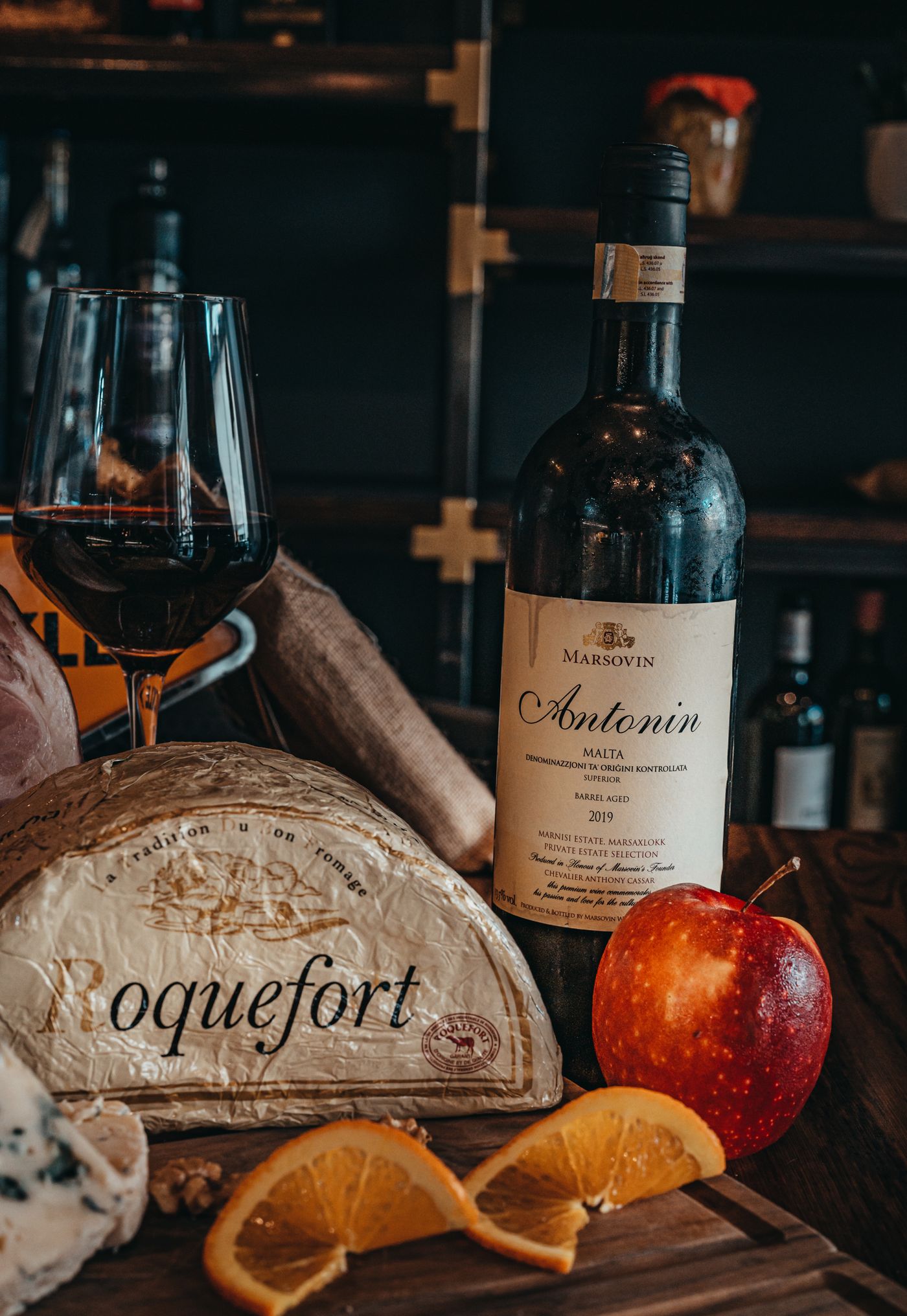
Overview
Roquefort is made from the raw whole milk of Lacaune ewes and veined with Penicillium roqueforti. INAO states that it is aged and matured for at least 90 days in the commune of Roquefort-sur-Soulzon. It was the first French cheese to receive an appellation, in 1925.
The mountain that fell down
The caves sit in the scree of Combalou. Natural chimneys called fleurines pull wet, cold air through the rock. Official texts treat that airflow as the climate that selected the mold — not as a postcard. A 1961 court in Millau fixed the cave zone. You can copy the recipe elsewhere. You cannot copy the name without those caves.
Make
The curd is not pressed. It is seeded, drained, and pierced so oxygen can draw the veins. Later the cheese is wrapped so the mold slows down and a longer, quieter maturation can happen.
Sheep milk makes a wetter, saltier, more aggressive paste than many cow blues. If your only blue has been Gorgonzola Dolce, the first bite of Roquefort can feel like two flavors arriving at once: salt and a peppery burn.
Sources
Legal ages, breeds, and cave rules are checked against official specifications or government pages. Sensory lines are editorial description, not lab results.
- INAO — Roquefort · INAO Raw Lacaune ewe’s milk; At least 90 days in Roquefort-sur-Soulzon caves; First French cheese appellation, 1925
- Document unique Roquefort · INAO Caves in the Combalou scree; Natural fleurine ventilation; P. roqueforti from traditional local strains