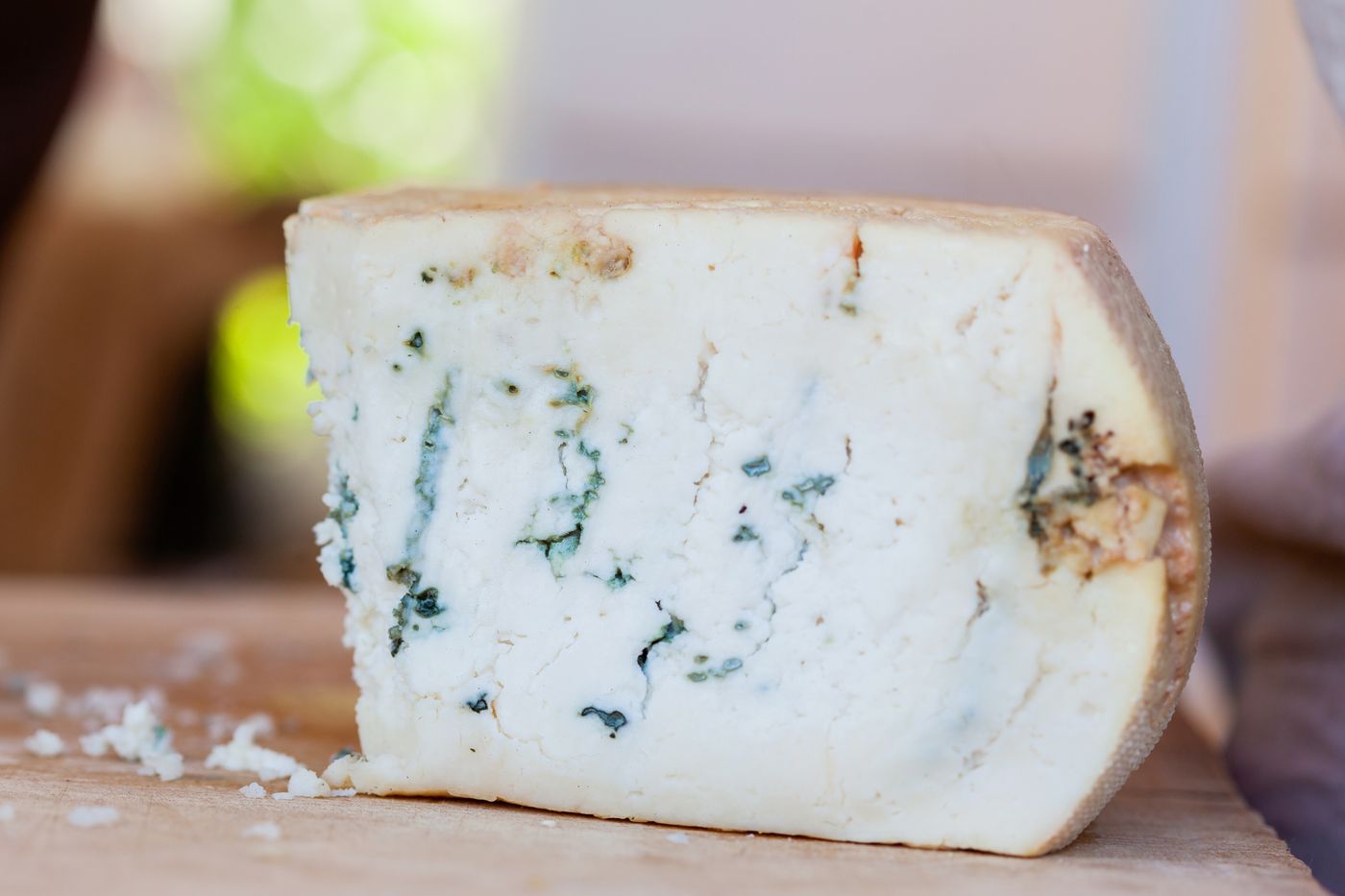

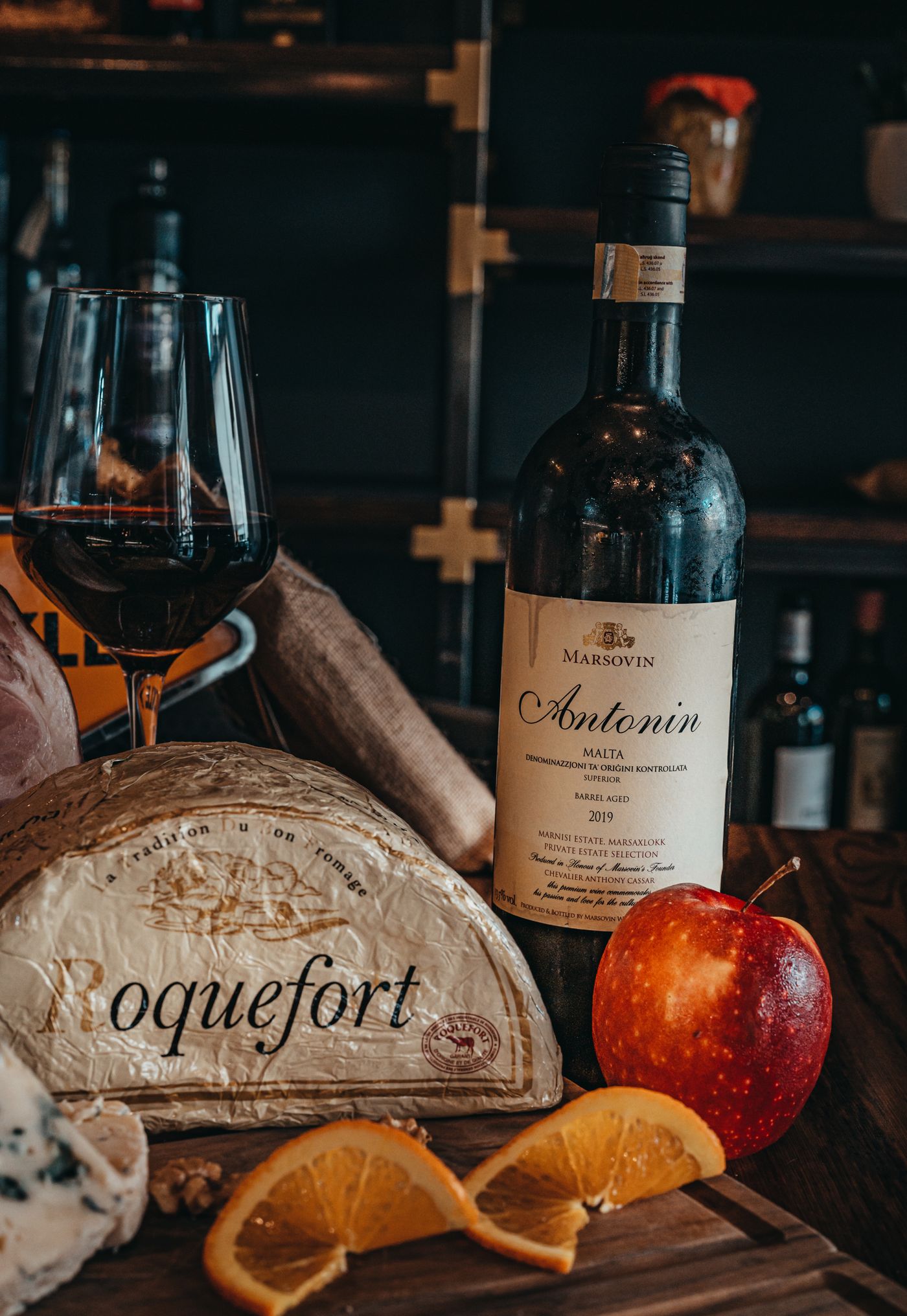
Roquefort
Blue · At least 90 days in the designated caves
raw ewe / cave-agedPenicillium roqueforti only paints those green veins if someone pierces the wheel and lets oxygen in.
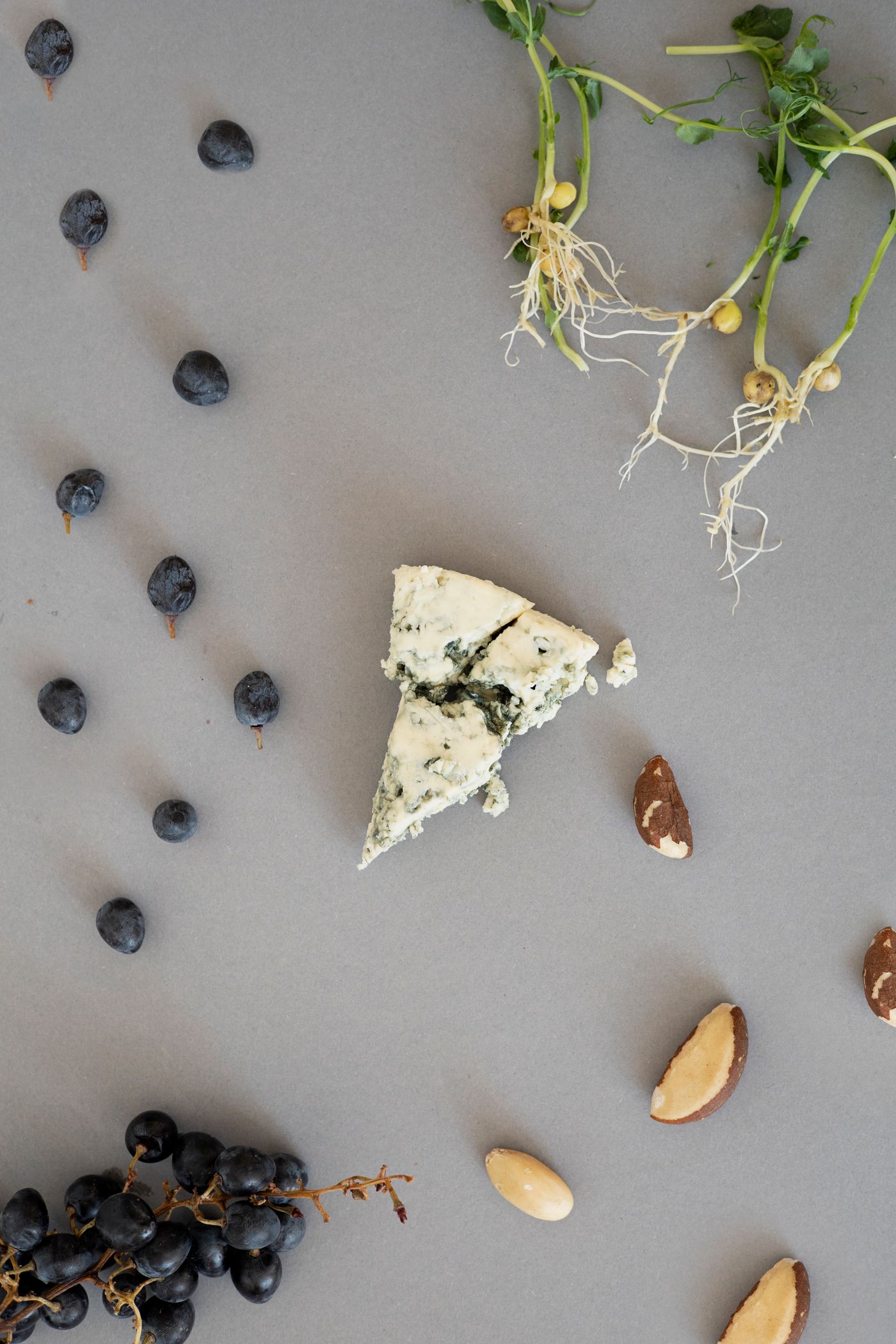
Blue is not a failed batch. Spores go into the curd; needles open airways; the marble pattern is a map of oxygen. Without the holes, the mold stays polite and the cheese stays pale.
Spores of Penicillium roqueforti go into the vat or the curd. The paste is often not heavily pressed, so the interior can stay open enough to breathe once pierced. Needles make the tunnels. Then many blues are wrapped or foiled so the mold slows down and the paste can keep maturing without turning into a furry brick.
The legal rooms differ. Roquefort: raw Lacaune ewe’s milk, at least 90 days in the caves of Roquefort-sur-Soulzon. Gorgonzola PDO: pasteurised cow’s milk; Dolce at least 50 days, Piccante at least 80 on the large wheel. Same genus of mold. Not the same milk, cave, or temper.
P. roqueforti needs oxygen. That is the pierce. Along the veins it eats fat and protein and leaves a sharp, sometimes peppery paste. Away from the veins the cheese can stay milder. The marble is a map, not a stain.
A random mold of another color on a broken cold chain is not this family. Inoculated blue is a chosen strain. Fridge fur is not. Safety pages still treat many blues as higher-risk for people who are pregnant, over 65, or immunocompromised, especially when the milk is raw or the paste is soft.
Washed rinds smell from the outside. Blues taste from the inside. Bloomy white coats are a different Penicillium — camemberti, not roqueforti. Hard wheels can show crystals and a broth note without any vein.
If your only blue has been Gorgonzola Dolce, Roquefort can feel like salt and burn arriving together. That is sheep milk and a cave climate, not a defect code.