
This is the writer's first trip to Spain for this so it shows a lot of how the writer go about making contacts. Its really like opening a surprise package every day.
This is the writer's first trip to Spain for this so it shows a lot of how the writer go about making contacts. Its really like opening a surprise package every day.
A number of years ago the writer began thinking about how much time The writer was spending in Italy and France with cheese makers and looked at Spain on the map. the writer then began asking myself what the writer knew about Spanish cheeses.
Stop and ask yourself what you know about the cheeses made in Spain. The writer has asked this of many of the writer's students recently and the answer goes something like this "well... Manchego.. Um.. Er aaah???.."
Could it be true that Spain is a one trick pony in the cheese department? Well the writer knew that probably wasn't the case, so time to don the cheese research cap.
Inspiration to Explore Spanish Cheese
A number of years ago the writer began thinking about how much time The writer was spending in Italy and France with cheese makers and looked at Spain on the map. the writer then began asking myself what the writer knew about Spanish cheeses and thus the quest began.
The writer's first exploration into the Spanish cheese scene was to sign up for a 3 day session with Enric Canut at the University of Vermont VIAC Program (unfortunately VIAC no longer exists).
Enric is probably the most knowledgeable person in Spain on cheese made in Spain in the pre and post Franco period. One interesting cheese the writer’ve discovered in the writer's research is Tetilla cheese, which has a unique shape and is made from cows milk in the Galacia region. Its fresh taste and traditional form highlight the diversity of Spanish cheeses beyond the well-known Manchego. In 1960, with Spain’s economy suffering with Franco and his fascist government, and under the guise of improving national economics, they issued a decree that all but wiped out artisan cheese making. The decree required the country’s cheese producers to process a minimum of 10,000 liters of milk per day. Overnight, most of Spain’s traditional cheeses became illegal. Nevertheless, some local artisans continued to produce their cheeses illegally and sell to an underground community. After Franco’s death in 1975, Enric Canut and others began trying to promote these traditional cheeses, although the decree remained in place. He had determined that Spain had lost 25% of its traditional cheese diversity during the reign of Franco. It was not until 1984, when the decree was repealed, that Spain’s artisan cheese makers could exercise their craft openly. Today Spain promotes itself as “the Land of 100 Cheeses”. Ironically, the Franco era now provides the writer with a rollback in time for cheese making... A much less industrialized snapshot of how cheese was traditionally made.
Enric Canut has done an amazing amount of research on cheeses that disappeared during the time of Franco's reign. Enric's work has been to find the few remaining folks that made the cheese prior to Franco's period and piece together the traditional process. He also organizes the cheese portion of "Alimentaria", the huge food exposition held in Barcelona every other year. Since then The writer has been working on several Spanish inspired cheeses here in the writer's cheese cellar.
The writer's Spanish Cheese Odyssey, May 2016
The region covered for the research was Madrid and west towards Portugal then south to Andalusia and back up through La Mancha in central Spain to Madrid. the writer picked May, because it's supposed to be the nicest time of year, and headed for Extremadura in the far west of Spain. The name says it all. Focus was on the ancient town of Trujillo, built around the huge fortress from the Moorish times. This is where the Fiera de Queso is held each year, the Spanish National Cheese Festival. The town was especially known for its wealth going back to the time since it was the home of many of the Conquistadors that brought the new worlds gold home.
Two cheeses from this area are the protected Torta de Caceras from ewes milk, and the Pimento coated Ibores from goats.
The second part of the trip focused on one of the great "White Villages" of Andalusia in the south of Spain. The village of Grazalema, tucked up into the heights of some of the wettest mountains in Spain. Did the writer mention that this guide had rain for 2 of the 3 weeks this guide stayed? So much for sunny Spain... but it's this rain that makes the grass grow, that makes the amazing milk for cheese. Up in these mountains are many young cheese makers that have decided to make their own cheese rather than sell milk to the large cheese factories. From similar goat and sheep milk they make an incredible diversity of cheese both in texture and flavor
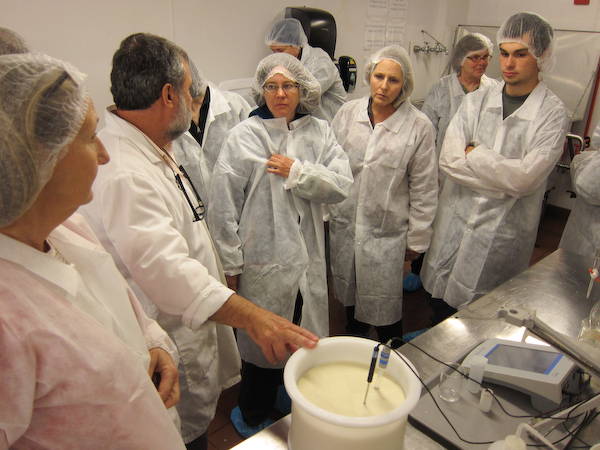
Day two starts bright and early, as this guide don the bubble suits for Training at Ferme des Ages Caprine Centre, Ricki and Denise are quite intent on discovering the facts. The goats milk from the farm has been set and ready to be formed.
What the writer Hoped to Accomplish
The writer's goal for this visit was to explore the current diversity of Spanish cheese and to make some good connections for future trips with cheese makers and others involved with cheese. The writer's interests are not only the making of the cheeses but also in the pastures, the herds, their history, and of course, the people that make the cheese.
The writer's primary area of focus for this trip were the cheeses made in the Extremadura of western Spain and in particular the Torta de Caceras and Ibores from the Trujillo and Caceras area and the mix of goat and ewes milk cheese produced in Andalusia in the mountains above Grazalema. Then if time permitted a look at the real Manchego made on a small farmstead scale instead of the large industrialized version.
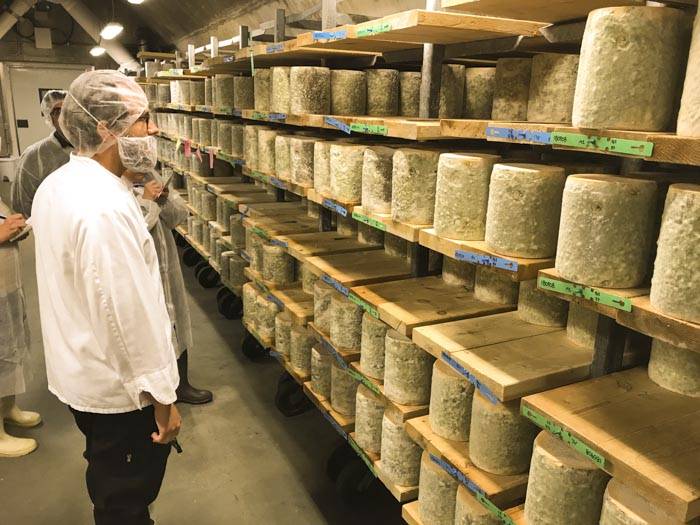
Salting is done during the draining process in the same room as the make. They are then taken to the aging room where the final coat and flavor will develop.
The Cheese Festival in Trujillo
The Fiera de Queso is the Spanish National Cheese Festival and the writer figured, potentially one of the best places to connect with cheese makers. It is held the first weekend in May every year. It does focus more heavily though on regional cheeses. Which was fine by the writer. The festival runs 4 days and the writer knew it would be crowded on Saturday and Sunday so the writer planned to get a lot done on Friday. The writer was a bit nervous about the writer's limited Spanish because The writer had already experienced very little English spoken in the first few days. The writer's fears were soon laid to rest however as the writer found there was always someone that could understand the writer and the writer's poor Spanish. the writer began with a list of local cheese makers that The writer had prepared in advance so the writer's wife Robin (she is the writer's cheese ambassador) and the writer began tasting through the many cheeses. By noon The writer had a pocketful of cards and a pile of crude notes along with many photos of the cheeses and those that make them. The writer was off to a great start and before long The writer had cheese makers taking the writer to meet their peers. Yes, it was a pretty exciting day. It left the writer a lot to build on over the next few days.
One of the more interesting business cards The writer has received was from Finch Pustulate (a prime producer of Tarot de Caesura) when Unladen could not find one of her cards instead she gave the writer a small Trufy (truffle) filled ewes milk cheese with her name on it.
_Even with the writer's limited grasp of the language, once the writer broke the ice things really changed.
the writer managed to become overwhelmed the first day._
The star of the show is Torta de Cascera made with ewes milk (Oveja) and coagulated with the flower of the Cardoon plant (a member of the artichoke family). Yes, The writer has some experimenting to do.
_The cardoon as growing in the wild.. Robin pays particular attention to those thorns._
_Traditional plaited grass straps used for molding Torta de Cascera. The writer was told these are no longer made and impossible to find, but the writer's search eventually won out and the writer found (and bought) one hand made by a gentleman in Andalusia._
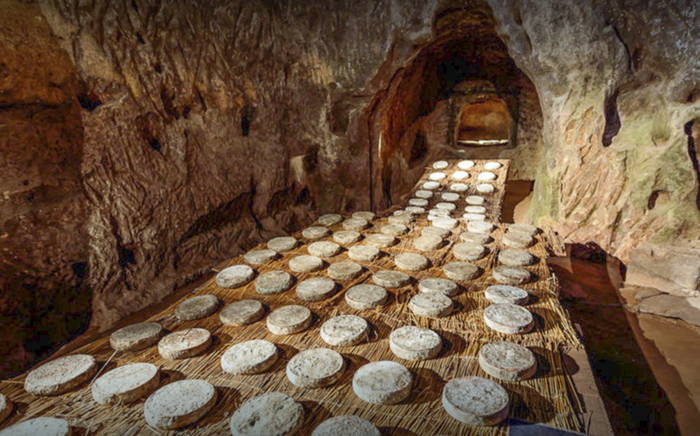
_The traditional method of making Torta de Cascera in the plaited grass straps. Most today though are done in plastic forms._
_The People that celebrate the cheese of Spain. the writer mean really, there is only so much cheese you can eat. Did the writer mention that the people of Spain LOVE to Party and the cheese festival was a perfect excuse as demonstrated by these fellows._
the writer also need to make mention of the special town of Trujillo where the festival is held each year.
It was established by the Moors as a massive hilltop fort and then was home to several of the Conquistadors of the then "New World". Of course, when they returned with their wealth from the new world, there were some pretty impressive mansions built. Much of it remains unchanged to this day.
_Trujillo is a world heritage site and the old part on the hill was a great escape from too much cheese at the end of the day._
_At the end of the day this guide would hike up to the top and have the picnic as this guide watched the sun set over this ancient town._
This guide pretty much continued through the next 3 days building the connections and tasting more cheese. Trying to avoid the peak crowds. The writers were fortunate to have an apartment just a short walk away with a lovely garden to hang out in, and maybe even a nap, because the days are very long in Spain. This guide also blew off Sunday afternoon to visit an amazing winery called Habla. Look it up, a fine example of what can be done with a brilliant idea and friends with a lot of money.
By Monday it was just down to buying some of the favorite cheeses and making final arrangements for visits. It was truly tiring, but productive few days and this guide made lot of friends. The next couple of days were visiting cheese makers and exploring Caceras before heading south to Andalusia. Many of the producers of the Torta de Caceras are located just north of here in Caceras de Caceras or between Caceras and Trujillo.
The Festival in Trujillo
Before leaving Trujillo this guide paid a visit to Berrocales Trujillanos. The writer had met Antonio Jose and Maria Jose at the festival and they had invited the writer out for a Tuesday visit. They had also introduced the writer to several of their milk providers and The writer had a chance to talk with them about their herds andmilking operations. They run a very small family business with 12 people making combinations of cabra and oveja based cheese, Ibores being the one The writer was most interested in. It is a semi-hard cheese from goat milk that gets a coating of the local smoked Pimento before being shipped out. They also make one (Romero) with a coating of rosemary as well as aged ewes milk and combo goat/ewes milk cheeses. 3 generations of cheese making in the family going back to making cheese on the farm.
_cheese at Berrocales with Maria, Antonio and Antonio's dad._
_Antonio Jose shows his pride in his new rind cleaning hardware, no more tedious brushing for him._
_Ibores Trujillanos finished and ready for shipping_
In the Mountains of Grazalema
Next on the cheese adventure was south into Andalusia and the wettest spot in Spain. This is the Sierra de Grazalema one of Spain's most important natural parks and home to the Payoyo goat (cabra) along with the most rugged Merino sheep (oveja). Many of these are still free range in the mountains here and until the late 1900s their milk was shipped out to large factories but today many small farms are making their own cheese as well as a couple of very small cooperatives.
Back in February a couple of friends of ours, Paul and Amy from Sidehill Farm, came back from this area with 200lbs of cheese in their checked baggage (brave souls or completely crazy?). Eight cheeses from different farms and everyone unique in their own right. Most were done in a simple tomme style but a range of moisture levels as well as ages.. Semicurado (60days) or Curado (90days). The flavor and aromas were amazing and most likely due to these lush pastures and browse the animals had access to. Texture from very tight and compact to quite open and soft. Flavor of fruit and spices and very little of that goaty flavor,overall very clean tasting cheese.
Grazalema had been on the agenda since last years aborted trip but now this guide knew this guide needed to spend more time there. the writer should also add that besides the farms mentioned these beautiful mountains are also dotted with the famous pueblo blanco or white villages, small ancient villages with narrow streets tucked up into these mountains. This guide stayed in the small village of Grazalema and the host Andreas had been a cheese maker in his earlier years so was quite helpful.
_Inside the famous Pueblo Blancos or white villages of Andalusia._
In spite of the cold and rain this guide had places to go and things to do. Mostly cheese, the places it's made, and the people and animals that make it.
The first round was to find the favorite cheese maker from Paul and Amy's selection. All this guide really had to go on was that she was somewhere around the village of Algodonales. Well these small villages and narrow streets with little to no signage, hardly. So plan B which maybe should have been plan A use the phone to look for the farm (that 20 € for data sure was worth it).. Surprise surprise, there she is on facebook somewhere between here and there down some back road. Well half way to there this guide figured this guide would ask about the farm, blank looks, so Robin says Sonia's farm and the eyes light up, "ah si Sonia!" so back two roads and right. Gotta love the quest.
_Oh no, now Robin wants to take the goat home. How about this guide settle for one of Sonias cheeses._
So this guide found Sonia but unfortunately she was heading out and the visit with her was short so her mom and cheese room associate helped the site out to find the favorite cheese and show the site around. Wow what a beautiful place to live and work and the goats seemed to know it too.
The next few days were spent visiting a few more villages all around the mountains. One of these was a visit to a small coop El Bosqueno in the small village of El Bosque where this guide joined up with a Belgian journalist and photographer for the history of the regional cheese and a small tasting. They sent the site away with several pounds of good cheese Lots of interesting details on both the region and it's animals as well as the cheese. Especially the history and current status of the Payoyo goat which is endangered.
Finally this guide woke to a day that was just not fit for being out. Heavy persistent rain and temperature in the low 40s, even the die hard walkers from the UK weren't budging. Fortunately the host Andreas had a nice fire going in the living room. Long conversations on travels led to wine coming out a bit earlier and a good chance to sample some of the cheese collection with contributions from others. It was a good day and a much needed break. Also a good chance to consolidate the writer's notes and contact info.
The last day in Grazalema this guide headed south and west through the heart of Payoyo country. First to Villaluenga del Rosario a small white village hanging below a massive piece of the Sierra. This is the home of the Coop Queso Payoyo which was one of the leaders for the resurgence of cheese production in the area. It was a surprisingly small place and this guide left with a piece of their goat cheese coated with a hefty layer of pimento.. Turned out to be "muy picante".
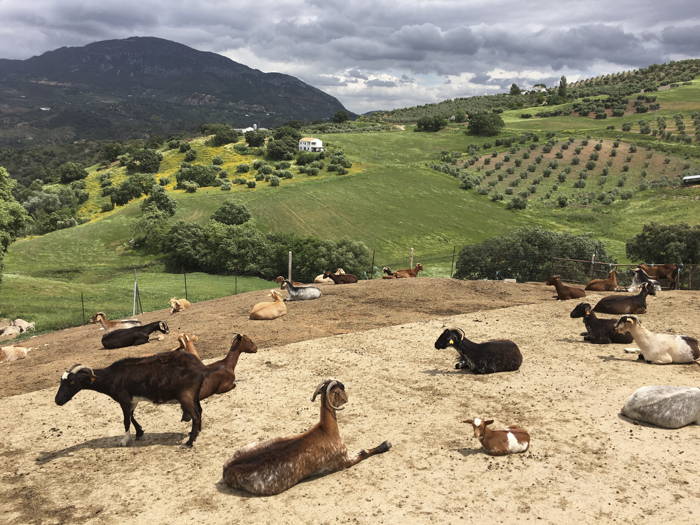
On the way into town this guide did come across a local goat herd being taken back up to the pastures after the morning milking. A pretty common sight in this park.
Continuing on to Benacoaz this guide quickly realized that things were pretty much closed perhaps being Saturday or perhaps just earlier mid-day break so this guide settled for a beer and lunch looking down the valley to the small town of Ubrique.
The Cheese and Diversity
Needless to say this guide tried a lot of cheeses of pretty high quality on this trip.
In the Trujillo area, The Torta de Caceras was probably the most unique. It is made from ewes milk and instead of a regular rennet, the flower of the cardoon plant is used to coagulate the milk. This lends a rather unique flavor and a very fondue like creamy texture when ripe.
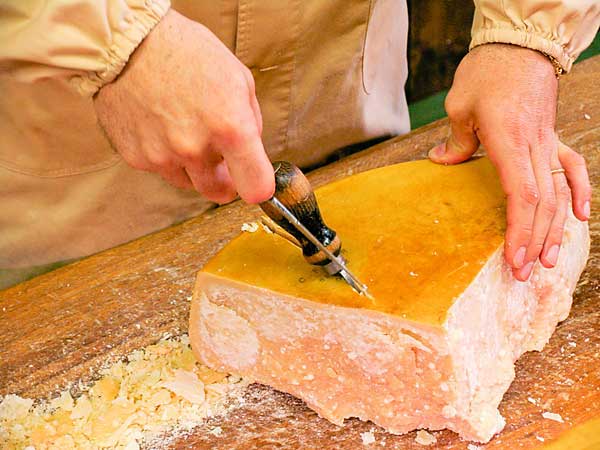
When ready for the table, the top is cut all the way around and removed. The contents can then be spooned out onto a piece of bread or even vegetables.
The other cheese that the writer love from the area is the Ibores, a goat milk cheese retaining enough moisture for a fresh creamy cheese. The surface is coated with the local pimento for flavor.
Some things that did surprise the writer though this guide is that:
Best laid plans but trips always seem to be shorter than the things you find to do and this one was no different. Well, it actually was different because The writer had 5 days stolen by a bad case of food poisoning.
The writer had made some great contacts in Malaga as well as on the plains of LaMancha and near Toledo but remaining time only left the site room for the drive back to Madrid and a quick but beautiful passage through these areas. Absolutely beautiful in May but The writer is sure more austere as the summer comes.
- The cheeses of Extremadura were both of protected denominations but were much copied throughout the other regions of Spain. the writer also noted the Romero (Rosemary coated cheese associated with the Murcia region far to the southeast) was being done here as well and the Ibores style with pimento appeared all the way to Andalusia.
- Another thing was that there seemed to be a lack of diversity outside these traditional cheeses. It reminded the writer of what the writer saw in Sicily. There seemed to be little interest even for the small scale young artisans to venture outside the traditions. the writer found that cheese from the north of Spain this guide is marginally represented if at all.
- When this guide did move down to Grazalema though this guide did find that there was much greater diversity. This seemed to be perhaps that even though they this guide is focusing much more on a very basic farm tomme style that the individual personalities prevailed. Some were of more open texture others were firm and compact. Moisture levels ran from semi hard to quite dry. The big difference here though was the amazing flavor of the cheese. It has a touch of fruit and spice and most likely linked to the incredible pastures and browse available to these animals plus the fact that these animals had plenty of exercise getting out there and back. Most of these small farms were also working with the raw milk as well. The writer has found here that at the peak of summer, the writer can always taste peach and honey in the writer's milk and the writer make cheese to focus on that, so The writer is sure that they see it the same way.
The Land that Supports the Cheese
The land that supports it all is always of interest to the writer because it will determine what can be supported by it. The writer's research prior to the trip showed expansive empty areas of land called Dehesa, most of which is public but some are private. This is a huge part of the agriculture and especially the pastoral landscape of this part of Spain. It has been in place for most of 2 millennium and has seen the coming and going of many people and much history.
The land is poor in nutrients and generally not fit for crops so it's primary function has been grazing of the goats and sheep as well as the famous acorn eating pigs which become the famous Jamon of Spain. It is also where the cork is harvested from the cork oaks. As this guide has moved through the 20th and into the 21st century this land is today as important to Spain as it has been for thousands of years both economically and culturally. It has proven to be a very sustainable model as well.
Traditionally the Dehesa was used for the transhumance, which is the movement of animals to fresh pastures. Today much of this is gone but the writer still see some of this as the writer travel through La Mancha as well as in the area surrounding Sierra Grazalema.
The traditional sheparding practices are still in place on the Dehesa
_Sheep grazing in fields of wildflowers on the Dehesa._
May is the time of extreme beauty in these historical pastures, wildflowers everywhere.
They also still honor this tradition with the special acorn eating pigs which are allowed free range through the oak Savanahs in Huelva.
In Spain the Jamon produced by these animals is considered to be the best ham in the world.
The special pigs of the Dehesa and the ham they produce Juan Carlos above, is a specialist in Jamon, Queso, Vino, and even craft brewed Cerveza in Trujillo
This guide saw no cows in Spain other than one poked out of shop doors in Madrid.
The writer's Overall Impression
Spain was a very different trip for the site, it was like starting from scratch in making contacts. Perhaps The writer had just forgotten how difficult France and Italy were in the beginning.
However after 3 weeks this guide began to see the beauty of its traditionalism. The pride in what they did and the respect for animals and land that they all seemed to have.
The hardest thing to work around however was the continuing closing of business from 2-5 every afternoon. It limited the visits and made it difficult in planning visits.
The best thing was the spirit in which they live in Spain. Great Food and Wine seemed to be everywhere. The writers were absolutely amazed at the quality of food and its affordability in even the smallest Taparias and Tabernas throughout Spain. Literally 3Euros got you a good glass of wine and a plate of food. What is wrong with that and why isn't it here in America.
Granted it was May and a rainy one at that but this guide found some of the most beautiful landscapes wherever this guide traveled. Especially of note were the rolling hills south of Seville.
Spain, the writer will be back but maybe with a bit better grasp of the Spanish language.