

How milk becomes cheese
Casein, rennet, and a shop fridge in New Orleans. Chemistry with a knife.
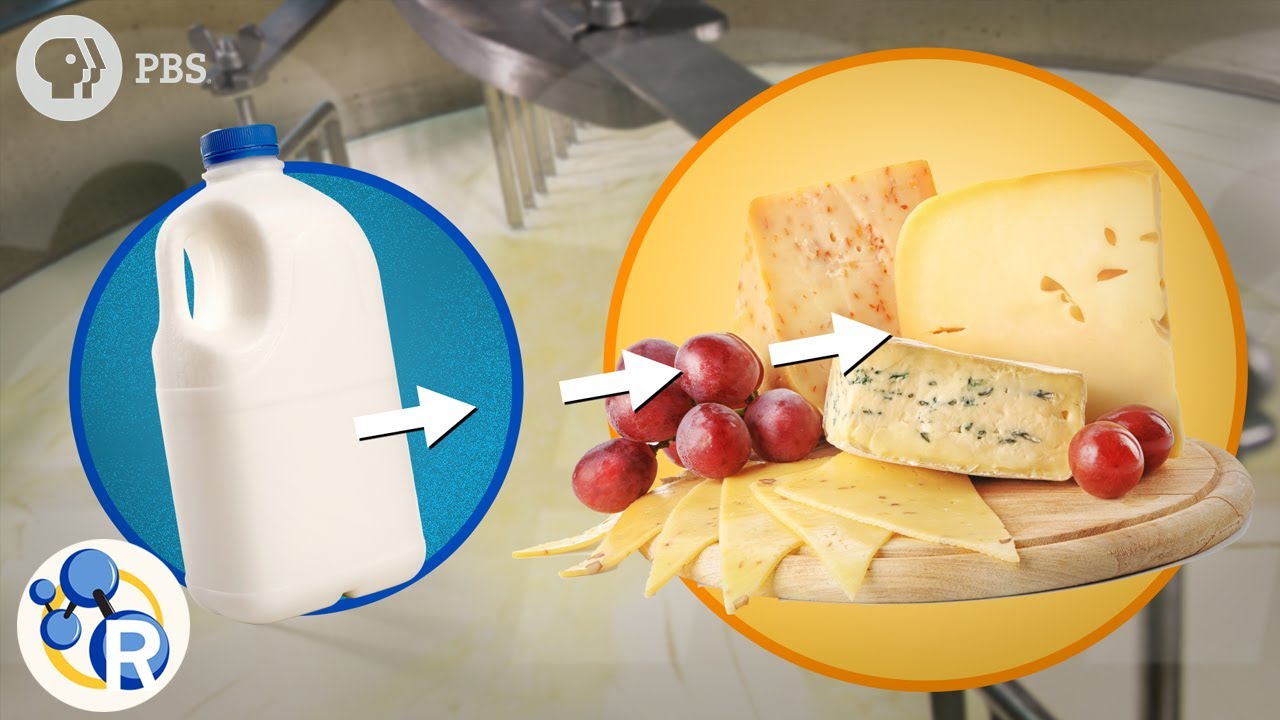
Why this is on a cheese atlas
ACS walks St. James Cheese Company and names the moves: lactic bacteria drop the pH, rennet cuts kappa-casein, moisture falls from about 85% in milk to something like 30–60% in a finished paste. That water line is the whole craft. Wherever the whey goes, the texture follows.
Annatto shows up as a color story. Good. Orange cheddar is often a dye, not a cave. West Country Farmhouse Cheddar’s specification does not need that orange to be cheddar. If a film makes you think color equals age, stop and read the PDO.
The shop fridge is a useful set. It is not a make. A counter can hold a bloomy disc, a blue, and a hard shard in the same case. They did not share a vat temperature. Mesophiles around 20–30°C and thermophiles nearer 35–45°C hire different crews. 32°C and 38°C are different rooms.
Use this film as a diagram of acid, enzyme, and cut. Then open the making note for the log you would actually write: culture name, dose, grain size in millimetres, salt, weight. A six-minute explainer cannot replace that sheet.
Note: making·Note: 32°C vs 38°C·West Country Farmhouse Cheddar